


What does “bilateral epididymal head cysts” mean?

Bilateral epididymal head cysts refer to cystic lesions occurring in the heads of both epididymides. These are also known as spermatoceles. So, what exactly does “bilateral epididymal head cysts” mean?
What does “bilateral epididymal head cysts” mean?
They result from outward protrusion of the epididymal ducts, forming cystic lesions. Most cases are incidentally detected during routine ultrasound examinations. In a minority of cases, larger cysts may be palpable on physical examination. These lesions are benign and typically do not impair male sexual function or fertility; therefore, treatment is generally unnecessary. For men who have not yet fathered children, surgical intervention for epididymal cysts is particularly discouraged, as such surgery may damage the epididymis—potentially leading to epididymal obstruction and subsequent azoospermia. In fact, epididymal head cysts are relatively common among males; many individuals are found to have small, asymptomatic epididymal head cysts during scrotal color Doppler ultrasound examinations. Such small cysts require no treatment. Surgical intervention is considered only in rare instances—for example, when a large cyst causes discomfort, pain due to intracystic hemorrhage, or other bothersome symptoms. In the vast majority of cases, epididymal cysts require no treatment and can simply be monitored.
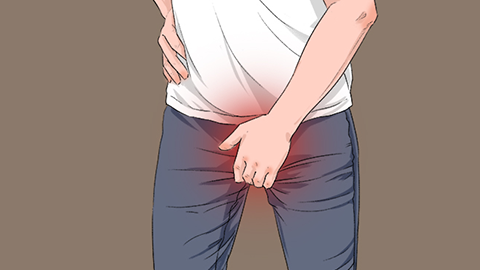
Cysts primarily develop when locally secreted fluid fails to be absorbed promptly, gradually accumulating to form a localized cystic lesion. Some patients remain entirely asymptomatic, with no associated clinical complications. Others, however, may experience discomfort or pain in the inguinal/scrotal region due to increased cyst tension; in rare cases, significant compression of the epididymal parenchyma may impede sperm transport, potentially contributing to obstructive azoospermia.
When a cyst is suspected, diagnosis is confirmed through physical examination and scrotal color Doppler ultrasound. In select cases, surgical excision may be indicated. Surgery remains the only definitive curative treatment for epididymal cysts. We hope this explanation has been helpful!


