


Efficacy and Functions of Buddha’s Hand Citron

With the improvement of living standards, people are increasingly focusing on health preservation. Buddha’s hand (Citrus medica var. sarcodactylis) is a commonly used herb in traditional health practices. So, what are the medicinal properties and therapeutic effects of Buddha’s hand?
Medicinal Properties and Therapeutic Effects of Buddha’s Hand
Buddha’s hand contains volatile oils, limonin, bitter principles, carbohydrates, dietary fiber, carotene, and citric acid. It enters the Liver and Spleen meridians, soothing liver Qi and alleviating symptoms caused by liver Qi deficiency—such as irritability, insomnia, vivid dreams, and chest tightness. Buddha’s hand also helps relieve poor appetite, indigestion, and gastritis, while warming the stomach, nourishing the liver, regulating Qi flow, and harmonizing the middle burner. Furthermore, it is effective for phlegm-related conditions—including cough, asthma, and bronchitis—exerting expectorant and antitussive effects. Buddha’s hand may also be used to treat gynecological disorders related to imbalances in body fluid metabolism (e.g., excessive dryness or dampness).
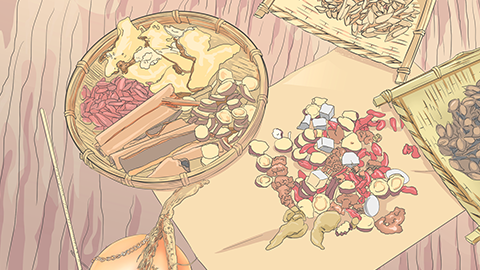
The fruit is harvested in autumn before turning yellow—or just as it begins to yellow—and then sliced thinly. After rinsing, it is boiled in cold water until it reaches a boil, then served in a bowl for consumption. 1. Buddha’s Hand and Rose Tea: 10 g Buddha’s hand and 5 g rose petals. Steep in boiling water and drink. This formula leverages Buddha’s hand and rose petals to soothe the Liver and regulate Qi. It is indicated for liver Qi stagnation manifesting as distending pain in the chest and hypochondrium, and reduced appetite. 2. Buddha’s Hand and Ginger Syrup Drink: 10 g Buddha’s hand and 10 g fresh ginger. Add an appropriate amount of sugar, decoct in water, and drink; alternatively, steep in boiling water or consume as a tea. This formula utilizes Buddha’s hand to soothe the Liver, regulate Qi, strengthen digestion, and harmonize the middle burner, while ginger warms the stomach and suppresses nausea.

During preparation, attention must be paid to herb compatibility: certain combinations may produce counterproductive or adverse effects. Moreover, excessive consumption of health-promoting herbal teas may cause harm. We hope this information proves helpful to you!


