


How is fatty liver graded in terms of severity?

Non-alcoholic fatty liver disease (NAFLD), commonly referred to as “fatty liver,” is a well-recognized condition—especially among modern populations whose diets are often unbalanced and excessively high in fat, thereby increasing the risk of developing this disorder. Fatty liver severity is generally classified into three categories: mild, moderate, and severe. But how exactly is fatty liver graded by severity?
How Is Fatty Liver Severity Classified?
In its early stage, fatty liver is typically mild. At this stage, hepatic fat content accounts for approximately 5–10% of liver wet weight, or histologically, lipid accumulation is observed in roughly 30–40% of hepatocytes under light microscopy. Ultrasound findings include enhanced echogenicity in the near field, minimal acoustic attenuation in the far field, and preserved visibility of intrahepatic vascular structures; overall, the liver architecture appears largely normal.
With progression to moderate fatty liver—often due to delayed diagnosis and inadequate intervention—hepatic fat content rises to about 10–15% of liver wet weight, and lipid accumulation affects approximately 50–60% of hepatocytes on light microscopy. Ultrasound reveals increased echogenicity in the near field and decreased echogenicity in the far field, with blurred visualization of intrahepatic vascular structures. Patients may remain asymptomatic or experience only nonspecific symptoms such as reduced appetite and mild discomfort; however, liver function tests may show subtle abnormalities.

In severe fatty liver, hepatic fat content exceeds 25% of liver wet weight, and over 75% of hepatocytes exhibit steatosis on histological examination. Ultrasound demonstrates markedly increased echogenicity in the near field, significantly reduced echogenicity in the far field, and loss of discernible intrahepatic vascular structures. Patients may develop more pronounced symptoms—including right upper quadrant pain, abdominal discomfort, jaundice, and spider angiomas—and require prompt medical evaluation and treatment.
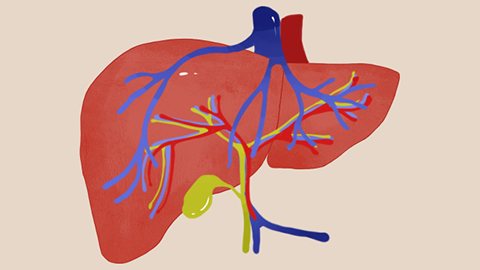
Assessment of fatty liver severity relies on an integrated evaluation incorporating ultrasound imaging, clinical symptomatology, and laboratory test results (e.g., blood tests). Early detection and timely, standardized treatment can halt disease progression. Even in advanced stages, active management remains essential to prevent further deterioration. We hope this article has been helpful. Wishing you a joyful life and optimal health!


