


Can gout be transmitted to others?

Many people in daily life suffer from gout, a common clinical condition that significantly impairs quality of life and overall health. Individuals with gout must adhere to strict dietary restrictions. But does gout spread from person to person?
Is gout contagious?
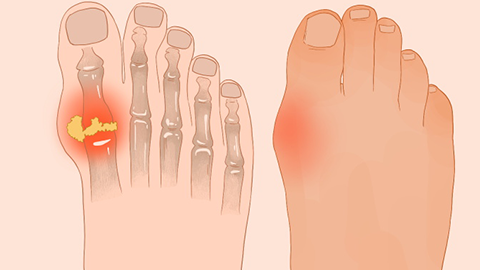
Gout is not an infectious disease and cannot be transmitted to others. For an infection to spread from one person to another, a pathogen must travel via a specific transmission route—such as respiratory droplets in the case of COVID-19. In contrast, gout results from reduced uric acid excretion by the kidneys, leading to chronic accumulation of uric acid in the body. Over time, excessive uric acid crystallizes and forms deposits—commonly in joints or the kidneys—which trigger gout attacks.

Common features of acute gouty arthritis
1. Sudden onset typically occurs at night or early morning, with excruciating joint pain described as tearing, cutting, or crushing—often unbearable. Within hours, the affected joint becomes red, swollen, warm, painful, and functionally impaired.
2. The first metatarsophalangeal joint (big toe) is most frequently involved; other commonly affected joints include fingers, ankles, knees, wrists, and elbows.
3. Attacks are usually self-limiting, resolving spontaneously within several days to two weeks. Post-attack, the overlying skin may become scaly and itchy.
4. Hyperuricemia is often present.
5. Needle-shaped, negatively birefringent monosodium urate crystals can be identified in synovial fluid or tophus aspirates under polarized light microscopy.
Patients with gout should pay close attention to daily dietary habits and nutritional balance. Avoid highly spiced foods and those rich in purines to prevent gout flares that severely disrupt daily life. We hope this information proves helpful to you.


