


Does going to bed late and waking up late count as staying up late?

Young people often lead irregular lifestyles—busy with work during the day and performing household chores at night that should ideally be done during daytime hours. Over time, this habit delays their normal bedtime. So, does going to bed late and waking up late count as “staying up late” (i.e., sleep deprivation or circadian disruption)?
Does going to bed late and waking up late count as staying up late?
Yes, absolutely—it does constitute staying up late. Some individuals may believe that as long as they obtain eight hours of sleep, there is no difference between sleeping early versus late—or that skipping nighttime sleep can be fully compensated for by sleeping during the day. This notion is incorrect. People should sleep during the biologically appropriate time. Failing to do so deprives both the body and brain of essential rest and recovery opportunities. Disrupting one’s natural sleep–wake schedule disturbs the circadian rhythm, and over the long term, such disruption poses significant risks to health. Humans evolved a circadian rhythm aligned with Earth’s environmental cycles—working during daylight and resting after sunset—shaped by solar light patterns. Currently, humans cannot override this innate biological rhythm; we can only adapt to it. Failure to do so may lead to numerous physical and mental health issues, including emotional instability, impaired memory, and physical decline. Occasional late-night activity is generally not problematic, but chronic sleep deprivation weakens immune function and increases susceptibility to various chronic diseases. Therefore, avoiding late-night habits and ensuring sufficient, high-quality sleep is critically important.
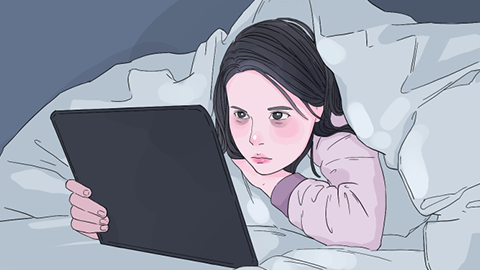
Although total sleep duration may remain adequate in a late-to-sleep, late-to-wake pattern, prolonged adherence to such a schedule exerts multiple adverse effects on the body. First, it compromises immune function, increasing susceptibility to colds and infectious diseases. Second, chronic late sleeping and rising may contribute to memory impairment and forgetfulness. Third, skin may become sallow, dull, and lackluster; metabolism slows down; and individuals become more prone to neurasthenia, anxiety, and depression. From the perspective of Traditional Chinese Medicine (TCM), ancient practitioners consistently advocated aligning daily routines with sunrise and sunset. Specifically, going to sleep by 10 p.m. allows blood to flow preferentially to the liver, which then nourishes the internal organs and the entire body.

Staying up late harms health; therefore, it should be avoided whenever possible—and one should refrain from engaging in behaviors detrimental to personal well-being. We hope this explanation proves helpful.


