


What should be done for a child with astigmatism?
Jun 29, 2022
Source: Cainiu Health

Dr. Chen You
Introduction
Astigmatism in children can be managed through self-correction techniques, such as regularly performing eye-rotation exercises and modifying poor visual habits. Optical correction is also commonly used—typically with cylindrical lenses. For irregular or high astigmatism, rigid gas-permeable contact lenses may be prescribed. In severe cases, surgical intervention may be necessary. Children requiring evaluation should undergo a comprehensive refractive examination at a hospital, accompanied by their parents.
Astigmatism is a common and frequently occurring ophthalmic condition affecting individuals of all age groups, with a relatively higher incidence among children. In children, astigmatism not only compromises ocular health but also leads to significant visual impairment—potentially interfering with learning and resulting in declining academic performance. So, what should be done if a child develops astigmatism?
Management of Astigmatism in Children
Mild astigmatism in children may be managed through self-correction techniques, such as regularly performing eye-rotation exercises and correcting poor visual habits. Optical correction remains the primary treatment modality, typically involving cylindrical lenses (i.e., toric lenses). For irregular or high-degree astigmatism, rigid gas-permeable (RGP) contact lenses may be prescribed. In severe cases, surgical intervention may be necessary. Children requiring evaluation should be accompanied by their parents to a hospital for comprehensive refractive assessment. Some children may require cycloplegic refraction (after pupil dilation) to obtain precise measurements—including corneal topography and keratometry—and to screen for associated complications such as myopia or strabismus secondary to astigmatism.

Congenital astigmatism usually results from irregular corneal development, leading to uneven corneal thickness and asymmetrical growth—thereby impairing optical quality and reducing visual acuity. Laser refractive surgery may be indicated for correction. Traumatic astigmatism commonly arises from lens dislocation or positional deviation following ocular injury.
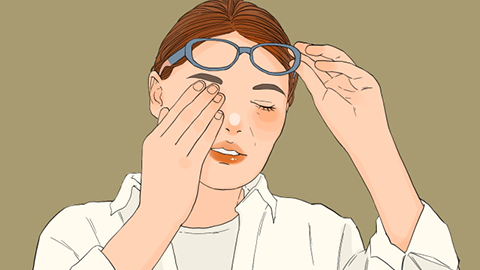
Daily lifestyle adjustments are essential: ensure adequate sleep and avoid prolonged periods of smartphone use or computer work with the head bent downward, as these habits may hinder ocular recovery. We hope this information proves helpful.



