


Does having astigmatism necessarily mean having myopia?
Jun 29, 2022
Source: Cainiu Health

Dr. Chen You
Introduction
Having astigmatism does not necessarily mean having myopia. Myopia primarily refers to a refractive condition in which parallel light rays entering the eye converge to form a single focal point *behind* the retina. Astigmatism, by contrast, refers to a condition in which parallel light rays focus as a line (focal line) rather than a point, due to unequal curvature of the refractive surfaces—most commonly the cornea. Both myopia and astigmatism are common in the general population. Corneal astigmatism—by far the most prevalent type—arises from structural irregularities: the cornea is not perfectly spherical but instead exhibits varying curvatures, often rendering the eye’s overall shape elliptical.
Astigmatism and myopia are very common refractive eye disorders that can lead to decreased visual acuity and blurred vision, thereby affecting ocular health. Some individuals have simple myopia or simple astigmatism alone, while others have both astigmatism and myopia concurrently. Does having astigmatism necessarily mean one also has myopia?
Does astigmatism always accompany myopia?
No—having astigmatism does not necessarily mean one has myopia. Myopia primarily refers to a refractive condition in which parallel light rays entering the eye converge to form a focal point *in front of* the retina. Astigmatism, by contrast, occurs when parallel light rays focus not at a single point but along a line (a “focal line”) due to uneven curvature across different meridians of the cornea or lens. Both conditions commonly coexist in most individuals; however, corneal astigmatism is mainly structural in origin. Specifically, an irregularly shaped (non-spherical) cornea—with varying curvatures—and an elliptical eyeball shape cause differing refractive powers across meridians, resulting in astigmatism.
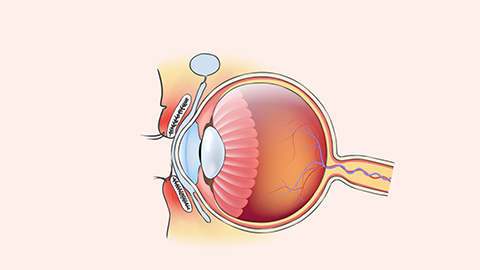
Myopia is typically a clinical manifestation wherein incoming light fails to focus precisely on the retina, instead converging anterior to it. Its hallmark features include reduced distance vision while near vision remains relatively normal. Astigmatism, however, arises from uneven development of corneal curvature, causing incident light rays to fail to converge into a single focal point on the retina—a clinical sign often presenting as diminished overall visual quality, with impairment in both distance and near vision.

The underlying pathophysiological mechanisms of myopia and astigmatism differ. Thus, myopia may develop without concurrent astigmatism. It is advisable to visit a professional optometry clinic for cycloplegic refraction—using cycloplegic agents to fully relax the ciliary muscle—to obtain an accurate assessment. We hope this explanation proves helpful.




