


What does “myopia with astigmatism” mean?
Jun 29, 2022
Source: Cainiu Health

Dr. Chen You
Introduction
Myopia combined with astigmatism results in reduced distance vision, with clinical symptoms including decreased visual quality and blurred vision. Myopia typically refers to a condition in which incoming light rays fail to converge into a single focal point on the retina, instead focusing anterior to the retina. Astigmatism is a clinical manifestation characterized by abnormal refraction or scattering of light entering the cornea, preventing formation of a single focal point and thereby altering retinal image quality.
Astigmatism and myopia are common manifestations of refractive errors. Mild astigmatism and myopia have minimal impact on visual acuity; however, without proper correction and treatment, the condition may progressively worsen—developing into moderate or high astigmatism and myopia—which not only impairs vision but also adversely affects daily life and work performance. So, what exactly does “myopia with astigmatism” mean?
What Does “Myopia with Astigmatism” Mean?
“Myopia with astigmatism” refers to decreased distance vision, clinically presenting as reduced visual quality and blurred object perception. Myopia typically occurs when incoming light rays fail to converge into a single focal point precisely on the retina, instead focusing anterior to the retina. Astigmatism arises when light entering the cornea undergoes irregular refraction or scattering, preventing formation of a single focal point and thereby altering retinal image quality. Therefore, upon suspicion of concurrent myopia and astigmatism, patients should first visit an ophthalmology refraction clinic to assess whether uncorrected visual acuity meets age-appropriate standards.
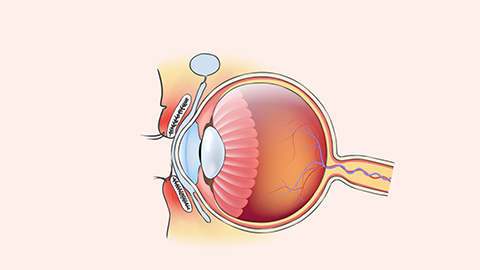
Myopic astigmatism exists in two forms: simple myopic astigmatism and compound myopic astigmatism. In astigmatism, rather than forming a single focal point, two focal lines are produced. When one focal line images on the retina and the other images anterior to the retina, it is termed simple myopic astigmatism. If both focal lines fall anterior to the retina, it is classified as compound myopic astigmatism.

In daily life, patients should maintain a positive mindset, actively cooperate with their physicians during treatment, take prescribed medications regularly and in correct dosages, and pay close attention to routine self-care—thus facilitating prompt clinical improvement. We hope this explanation proves helpful.



