


How to Identify Myopia in a 12-Year-Old
Jun 29, 2022
Source: Cainiu Health

Dr. Chen You
Introduction
A simple way to determine whether you have myopia is to find a newspaper. If you can clearly see the text up close but cannot see distant text clearly, you likely have myopia. To determine the degree of myopia, you need a refraction examination. You can undergo computerized refraction at an optical shop or in an ophthalmology department at a hospital. For a rough estimation of your refractive error, you may derive the diopter value from fitted data.
Seasonal changes represent a common period for the development and progression of myopia, especially among children and students. Currently, the majority of elementary school students suffer from myopia; therefore, parents should take proactive steps to prevent its onset in their children. How can one identify myopia in a 12-year-old?
How to Identify Myopia in a 12-Year-Old
A simple method to detect myopia is to use a newspaper. If the child can read nearby text clearly but struggles to discern text at a distance, this may indicate myopia. To determine the degree of myopia, a refraction examination is required. This can be performed at an optical shop or in an ophthalmology department at a hospital using automated (computerized) refractometry. For a rough estimation of refractive error, one may refer to the fitting data obtained during lens prescription. However, special attention is warranted for children under age 12: if the initial refractive measurement shows less than −1.50 diopters (D), cycloplegic refraction—performed after pharmacologic pupil dilation—is essential to rule out pseudomyopia.
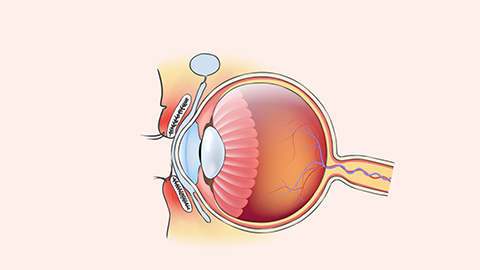
If a 12-year-old child aims to reverse or halt myopia progression, it is crucial to correct unhealthy visual habits and posture. Establishing a regular daily routine and managing visual workload are key. Comprehensive optical evaluation and appropriate refractive correction should also be undertaken. Surgical intervention (e.g., LASIK) is generally considered only after age 18, once refractive stability has been achieved. In routine practice, children should be taken to a professional optometry clinic for naked-eye (uncorrected) visual acuity testing. Using a standard 5-meter distance chart and a 33-centimeter near-vision chart, clinicians can assess whether the child’s visual function meets age-appropriate norms.
Children should cultivate healthy visual habits and maintain good ocular hygiene, including proper sitting posture while reading or studying. We hope this information proves helpful.








