Can M-shaped hair loss recover on its own?
Aug 06, 2022
Source: Cainiu Health

Dr. Liu Wan
Introduction
M-type alopecia is a form of seborrheic alopecia, also known as androgenetic alopecia, which is commonly associated with increased androgen secretion in affected individuals. It typically does not resolve spontaneously, and for most patients, the condition tends to progressively worsen. Treatment options include oral finasteride; for women, spironolactone may be prescribed to counteract androgen effects, or topical minoxidil may be applied to promote hair regrowth—hair will gradually regrow over time.
As people age, many gradually develop M-shaped hair loss, which can make them appear significantly older. Can M-shaped hair loss resolve spontaneously?
Can M-shaped hair loss resolve spontaneously?
M-shaped hair loss is a form of seborrheic alopecia—also known as androgenetic alopecia—and is commonly associated with increased androgen secretion in affected individuals. It typically does not resolve spontaneously, and for most patients, the condition tends to progressively worsen. Treatment options include oral finasteride (for men), or spironolactone (for women) to counteract androgenic effects. Topical minoxidil application may also promote hair regrowth, with noticeable hair growth occurring gradually over time.
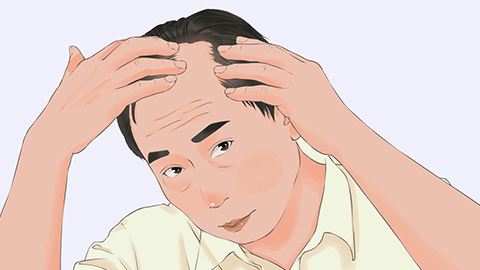
If pharmacological treatments prove ineffective, hair transplantation is an option. Clinically, hair follicles are commonly harvested from the occipital region (back of the scalp) and transplanted to the vertex or other areas affected by hair loss. In addition to surgical intervention, topical agents such as minoxidil and capsicum tincture may be used to stimulate hair growth. Oral therapies—including L-cystine, B-complex vitamins, spironolactone, and finasteride—may also be employed.

Preventing hair loss requires attention to daily lifestyle habits. Since many cases of hair loss are linked to unhealthy lifestyle patterns—such as chronic sleep deprivation and excessive physical or mental fatigue—it is essential to maintain a balanced routine, avoid overexertion, and ensure adequate rest. Individuals with seborrheic alopecia should also pay particular attention to their diet. Foods that are excessively sweet or highly spicy and irritating should be minimized or avoided altogether. We hope this information proves helpful!