


Can M-shaped hair loss be reversed?
Aug 03, 2022
Source: Cainiu Health

Dr. Liu Wan
Introduction
M-type hair loss can currently be effectively treated, with hair transplantation surgery being the most commonly used method—yielding excellent results.
“Hair transplantation” is the abbreviated term for “hair follicle transplantation.”
The surgical principle involves harvesting healthy hair follicle tissue from the donor’s occipital region (back of the head) using specialized instruments, separating it into individual or multi-follicular units, and then transplanting these follicular units into areas of thinning hair via precise microsurgical techniques.
Clinically, “M-shaped hair loss” refers to seborrheic alopecia, also known as androgenetic alopecia. This condition arises from excessive levels of androgens in the body, which continuously stimulate hair follicles locally, leading to overactive sebum production and subsequent hair shedding. So, can M-shaped hair loss be reversed?
Can M-shaped hair loss be reversed?
Currently, M-shaped hair loss can be effectively treated—commonly via hair transplantation surgery, which typically yields excellent results. “Hair transplantation” (often shortened to “hair grafting”) involves harvesting healthy hair follicle tissue from the donor area (typically the occipital region of the scalp) using specialized instruments. These follicles are then separated into individual or multi-follicular units and transplanted—using precise microsurgical techniques—into areas of thinning or balding hair. This procedure restores local hair density. Once transplanted, these follicles continue to grow naturally in their new location, retaining their inherent resistance to androgen-induced miniaturization and thus remaining permanently viable.
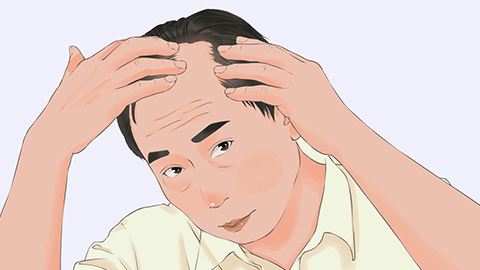
Hair transplantation offers high safety due to its autologous nature—i.e., using the patient’s own hair follicles—which eliminates risks of immune rejection. Autologous transplantation is feasible because a healthy adult typically possesses approximately 100,000 hair follicle units. During transplantation, only several thousand follicular units are harvested—carefully extracted individually from the occipital region and precisely placed in the recipient area (e.g., frontal hairline). This approach minimizes impact on the donor site while significantly enhancing hair density in the forehead region.

However, postoperative care is critical: adopting a healthy lifestyle helps maximize graft survival rates. We hope this information proves helpful!




