


What should I do if I have hemorrhoids accompanied by eczema around the anus?
Aug 09, 2022
Source: Cainiu Health

Dr. Cheng Yicheng
Introduction
For patients with hemorrhoids accompanied by eczema, it is essential to maintain local perianal skin health while administering pharmacological treatment for the hemorrhoids; surgical intervention may be required when necessary. Perianal eczema often results from severe hemorrhoids—specifically, when prolapsed hemorrhoidal tissue causes anal sphincter relaxation, leading to incomplete anal closure and subsequent leakage of substantial amounts of intestinal fluid, thereby triggering eczema.
Perianal moisture refers to abnormal dampness around the anus—a clinically challenging condition that often causes inconvenience in daily life and may lead to significant psychological stress for patients. Perianal moisture is associated with various perianal diseases and typically requires comprehensive treatment in later stages. So, what should be done if hemorrhoids are accompanied by eczema?
What to Do If Hemorrhoids Are Accompanied by Eczema
When hemorrhoids coexist with perianal eczema, it is essential to maintain local perianal hygiene and health while treating the hemorrhoids pharmacologically; surgical intervention may be necessary in some cases. Perianal eczema in such instances is often secondary to severe hemorrhoids: prolapsed hemorrhoidal tissue leads to anal sphincter relaxation, resulting in incomplete closure of the anus and leakage of substantial amounts of intestinal fluid—thereby triggering eczema. First and foremost, meticulous local perianal hygiene is crucial: change undergarments frequently, cleanse the perianal area regularly with warm water, gently pat dry, apply topical eczema ointment, and ensure the area remains dry.
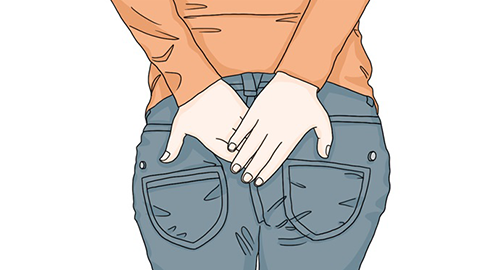
Actively treat hemorrhoids—whether internal or external. Generally, it is advisable to maintain soft stools and minimize defecation time. Consume ample vegetables and fruits, engage in regular physical activity, and drink plenty of water. Additionally, warm-water cleansing or sitz baths for the perianal region can be beneficial. Potassium permanganate solution or emollient skin lotions may be added to the bath water to help reduce swelling and relieve itching.
In daily life, patients should maintain a positive mindset, actively cooperate with their physicians’ treatment plans, take prescribed medications on time and in correct dosages, and pay close attention to routine self-care—thus facilitating prompt improvement of symptoms. We hope this information proves helpful to you.





