


How to Determine Whether You Have Yin Deficiency or Yang Deficiency
Aug 12, 2022
Source: Cainiu Health

Dr. He Haochen
Introduction
Both Yang deficiency and Yin deficiency present with distinct clinical symptoms; based on these symptoms, one can determine whether their condition is characterized by Yin deficiency or Yang deficiency. Patients with Yang deficiency commonly experience symptoms such as aversion to cold, cold extremities, weakness and soreness in the lower back and knees, and clear, copious urine. Oral administration of Jinkui Shenqi Wan (Jin Kui Kidney Qi Pill) may be used for regulation and treatment. In contrast, patients with Kidney Yin deficiency typically exhibit symptoms including heat sensation in the palms, soles, and chest (“five-center heat”), night sweats, seminal emission, dry mouth, dark yellow urine, and constipation.
In real life, many people frequently engage in masturbation, excessive sexual activity, or stay up late. When the body exceeds its physiological tolerance under such conditions, various health problems may arise. Individuals with kidney deficiency often exhibit symptoms such as dizziness, tinnitus, and fatigue. However, kidney deficiency is broadly categorized into two types: yin deficiency and yang deficiency. So how can one determine whether they have kidney yin deficiency or kidney yang deficiency?
How to Differentiate Between Kidney Yin Deficiency and Kidney Yang Deficiency
Both kidney yin deficiency and kidney yang deficiency present with distinct clinical manifestations. By observing these symptoms, one can preliminarily assess which type of deficiency applies.
Individuals with kidney yang deficiency commonly experience cold intolerance, cold limbs, weakness and soreness in the lower back and knees, and clear, copious urine. Oral administration of Jinkui Shenqi Wan (Jin Kui Kidney Qi Pill) may be used for regulation.
Conversely, those with kidney yin deficiency typically manifest symptoms including heat sensations in the palms, soles, and chest (“five-center heat”), night sweats, spontaneous or nocturnal emissions, dry mouth, dark yellow urine, and constipation. Liuwei Dihuang Wan (Six-Ingredient Rehmannia Pill) is commonly prescribed for internal use in such cases.
Nonetheless, if experiencing any discomfort, it is strongly recommended to consult a qualified physician at a正规 hospital for a comprehensive diagnosis based on pattern identification (bian zheng).
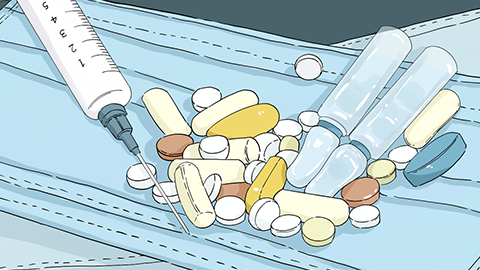
In addition to pharmacological treatment, patients—under professional medical guidance—may also benefit from Traditional Chinese Medicine (TCM) external therapies such as acupuncture, massage (anmo), and tuina. Furthermore, lifestyle modifications—including regular physical exercise and dietary therapy—can serve as supportive measures to tonify the kidneys.
Once any of the aforementioned symptoms appear, prompt medical evaluation is essential to ensure early detection, accurate diagnosis, and timely intervention—thereby optimizing therapeutic outcomes. We hope this information proves helpful to you.


