


How to Determine Whether You Have Bad Breath
Aug 14, 2022
Source: Cainiu Health

Dr. Zhang Liwen
Introduction
To determine whether you have bad breath (halitosis), you can try one of the following methods:
- Lick the back of your hand, wait a few seconds for the saliva to dry, and then smell it—if an unpleasant odor is present, you may have halitosis.
- Place your finger gently on your throat and sniff it to check for odor.
- Place a clean piece of gauze in your mouth, swirl it around with your tongue for several seconds, remove it, and then smell it for any unpleasant odor.
Halitosis (bad breath) may result from poor oral hygiene, improper diet, excessive mental stress, or underlying conditions such as oral diseases, respiratory disorders, gastrointestinal disorders, or metabolic diseases. Therefore, if you notice that your breath smells unpleasant and wish to determine whether you have halitosis—or to better understand its potential causes—you may consider undergoing relevant medical examinations. But how can you tell whether you yourself have halitosis?
How to Self-Assess for Halitosis
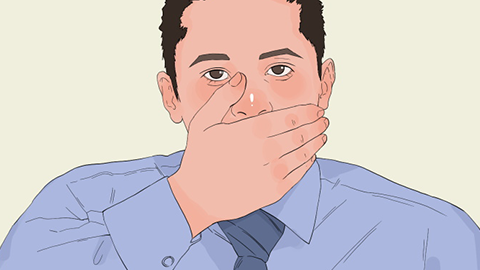
You can assess whether you have halitosis using several simple self-check methods: • Lick the back of your hand with your tongue, wait a few seconds for the saliva to dry, then smell the area—any noticeable odor suggests halitosis. • Place your finger on your tongue for several seconds, then remove it and sniff—this helps detect any unpleasant odor. • Place a clean piece of gauze in your mouth, gently rub it against your tongue for several seconds, then remove and smell it for signs of odor. • Cup both hands around your mouth and nose, exhale normally, and inhale through your nose to check for any unpleasant odor. • Use a clean piece of dental floss: insert it tightly between your teeth and gently move it back and forth several times; after removal, a distinct foul odor may be evident.
Halitosis is also closely related to daily toothbrushing habits. Inadequate oral cleaning increases the risk of dental caries and periodontal disease. Additionally, food debris trapped between teeth must be removed promptly; otherwise, retained food particles may decompose and ferment, producing foul odors. Such debris can also irritate the gums, leading to inflammation—and bacterial action on blood components may further contribute to malodor. Another common cause of halitosis includes upper respiratory tract conditions such as rhinitis, pharyngitis, and gastritis; thus, targeted evaluation and management of these conditions are also essential.

If you recognize symptoms suggestive of an underlying disease in daily life, seek timely medical evaluation and diagnosis, and actively cooperate with your healthcare provider’s recommended treatment plan. We hope this information proves helpful to you.


