


Can Sanjiu Weitai treat gastric ulcers?
Aug 15, 2022
Source: Cainiu Health

Dr. Zhao Haiming
Introduction
Sanjiu Weitai (also known as Yangweishu Granules) demonstrates certain therapeutic efficacy in the treatment of gastric ulcers. Yangweishu Granules exhibit marked therapeutic and preventive effects against experimental gastritis and various associated pathological changes. They significantly promote hemostasis and exert anti-ulcer activity. Additionally, these granules help regulate gastrointestinal dysfunction and are highly effective in treating gastrointestinal disorders induced by mental stress.
Sanjiu Weitai Granules is a commonly used medication. Its primary active ingredients are traditional Chinese herbs, including *Evodia rutaecarpa* (San Cha Ku), *Aucklandia lappa* (Mu Xiang), *Poria cocos* (Fu Ling), and *Paeonia lactiflora* (Bai Shao); lactose serves as an excipient. The medication is formulated as granules, which can be taken orally directly or dissolved in warm or cool boiled water. As an over-the-counter (OTC) drug, it is readily available for purchase. So, can Sanjiu Weitai treat gastric ulcers?
Can Sanjiu Weitai Treat Gastric Ulcers?
Sanjiu Weitai is also known as Yang Wei Shu Granules, and it demonstrates certain therapeutic efficacy against gastric ulcers. Yang Wei Shu Granules exhibit significant therapeutic and preventive effects against experimentally induced gastritis and various associated pathological changes. They notably promote hemostasis and possess anti-ulcer activity. Additionally, they help regulate gastrointestinal functional disorders, particularly those triggered by psychological stress. With anti-inflammatory, analgesic, qi-regulating, and stomach-strengthening properties, Yang Wei Shu Granules are clinically indicated for superficial gastritis and erosive gastritis. However, for severe gastric ulcers, proton pump inhibitors (PPIs) remain the first-line clinical treatment; representative agents include lansoprazole and omeprazole.

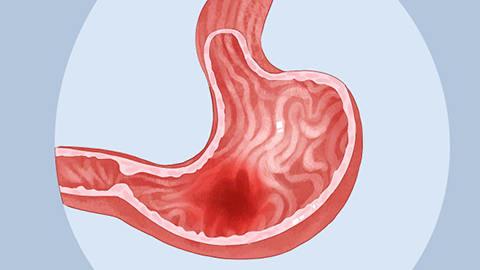
Complications of gastric ulcers include upper gastrointestinal bleeding, perforation, and gastric outlet obstruction. Upper gastrointestinal bleeding typically manifests as melena (black tarry stools) or coffee-ground emesis; with larger volumes of bleeding, hematochezia (bright red blood in stool) or even hematemesis (vomiting fresh red blood) may occur. Severe cases may present with dizziness, palpitations, or transient loss of consciousness. Perforation occurs when the ulcer lesion extends deeply through the serosal layer; this may lead to acute peritonitis and sudden, severe abdominal pain—often localized to the epigastric or right upper quadrant—and characterized by persistent, intense pain that may radiate diffusely across the abdomen. Gastric outlet obstruction (i.e., pyloric obstruction) may also develop, presenting with epigastric fullness and large-volume vomiting containing fermented, undigested food. Furthermore, gastric ulcers carry a risk of malignant transformation. In recurrent gastric ulcers, changes in the nature of ulcer-related pain—alongside unexplained weight loss and anemia—may signal malignancy.
If symptoms suggestive of disease appear, prompt consultation and active cooperation with medical professionals are essential to avoid delays in diagnosis and treatment. We hope this information proves helpful to you.




