


Does peeling skin on the soles indicate athlete’s foot?
Aug 24, 2022
Source: Cainiu Health

Dr. Liu Wan
Introduction
Peeling of the soles is not necessarily tinea pedis (athlete’s foot). There are many causes of sole peeling, with tinea pedis and eczema being the most common. In tinea pedis, peeling typically occurs on the soles and especially along the interdigital creases—where it is more pronounced and clinically significant. In addition to peeling, blisters may also appear. Tinea pedis sometimes affects only one foot.
Peeling of the soles is a common phenomenon in daily life. There are many potential causes, with tinea pedis (athlete’s foot) being the most frequent. If you have tinea pedis, you may experience not only pruritus (itching) but also noticeable desquamation (peeling) of the soles—causing considerable inconvenience in daily life. So, does sole peeling necessarily indicate tinea pedis?
Is Sole Peeling Always Tinea Pedis?
Sole peeling is not always caused by tinea pedis. Multiple conditions can lead to this symptom; among them, tinea pedis and eczema are the most common. In tinea pedis, desquamation typically occurs on the soles and especially along the interdigital folds (between the toes), where it is often more pronounced and clinically significant. In addition to peeling, small vesicles (blisters) may appear. Notably, tinea pedis sometimes affects only one foot. It tends to occur more frequently under warm, humid environmental conditions. A definitive diagnosis can be established through fungal examination at a dermatology clinic. In contrast, eczema presents with less well-defined, often symmetrical lesions affecting both feet, accompanied by intense pruritus. Besides sole peeling, some patients may exhibit marked exudation. Importantly, fungal tests in eczema patients are typically negative. Other common causes of sole peeling include palmoplantar keratoderma and exfoliative keratolysis—both of which can be accurately diagnosed in a dermatology department.

Sole peeling is not necessarily due to tinea pedis—it may also stem from eczema. Fungal testing is essential for differentiation: a negative result supports an eczema diagnosis, whereas a positive result confirms tinea pedis. Tinea pedis can be treated with both oral and topical antifungal agents. Topical options include terbinafine hydrochloride cream, terbinafine hydrochloride spray, fluconazole cream, clotrimazole cream, or naftifine-ketoconazole cream—all of which must be used under medical supervision.
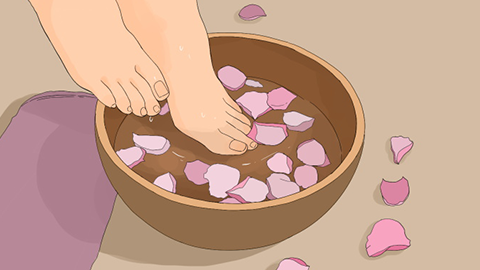
We recommend maintaining a balanced diet, avoiding spicy or irritating foods, and practicing good personal hygiene—all of which significantly aid recovery. Patients should also keep their feet warm and closely monitor symptom changes. We hope this information proves helpful to you.




