Can B-mode ultrasound detect liver cirrhosis?
Aug 24, 2022
Source: Cainiu Health

Dr. Zhao Haiming
Introduction
Ultrasound (B-mode ultrasound) can generally detect significant morphological changes in the liver of patients with cirrhosis. When such characteristic changes occur, the liver surface becomes irregular—primarily exhibiting a serrated appearance, and sometimes a nodular one. If ascites is present, the ultrasound image becomes even clearer. The liver’s transverse section loses its normal wedge-shaped (triangular) contour and instead appears more elliptical.
The liver’s appearance resembles that of a stone—it has lost its normal softness, and the properties of some hepatocytes have also changed. At this stage, cirrhosis may be present, and immediate medical evaluation at a hospital is essential. Can B-mode ultrasound (B-ultrasound) detect liver cirrhosis?
Can B-ultrasound detect liver cirrhosis?
In general, B-ultrasound can reveal distinct morphological changes in the livers of patients with cirrhosis. When such pathological changes occur, the liver surface becomes irregular—typically exhibiting a serrated or nodular contour. If ascites is present, the B-ultrasound image becomes even clearer: the liver’s cross-sectional shape loses its normal wedge-like (triangular) configuration and instead appears more elliptical. Additionally, B-ultrasound may detect subtle positional shifts in the liver—for instance, shortening of the craniocaudal diameter of the right lobe and compensatory hypertrophy of the left lobe, which often results in upward displacement of the right anterior axillary line relative to its normal position.
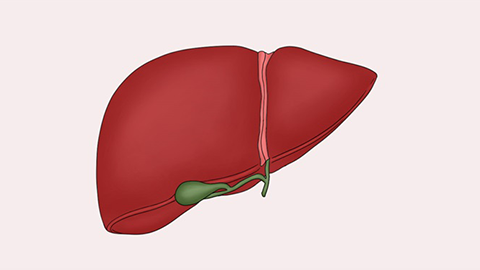
During B-ultrasound examination, patients with cirrhosis typically display intrahepatic masses; the normally smooth hepatic fibrous architecture disappears; echogenicity increases compared with normal liver tissue; parenchymal thickness becomes uneven; and the liver margins may appear blunted or irregular. B-ultrasound findings may also indicate alterations in hepatic parenchymal echotexture—due to fatty or fibrotic degeneration—resulting in relatively dense, diffuse echogenic enhancement or thickening. In macronodular cirrhosis, diffuse patchy changes are visible within the hepatic parenchyma, accompanied by heterogeneous echogenicity.

It is recommended to consume foods rich in vitamins while avoiding high-fat, high-protein, and spicy foods. Also avoid hard-to-digest items such as glutinous rice, dumplings, and fried foods. Eat smaller, more frequent meals and avoid overeating or binge eating. We hope this information proves helpful to you.