


What causes night sweats?
Aug 24, 2022
Source: Cainiu Health

Dr. He Haochen
Introduction
Night sweats may result from either Qi deficiency or Yin deficiency. If caused by Qi deficiency, it is typically due to impaired vascular vasodilation and can be regulated with modifications of Bu Zhong Yi Qi Tang (Tonify the Spleen and Augment the Qi Decoction). For night sweats arising from insufficient Heart Blood, it is recommended first to investigate possible tuberculosis infection, underlying constitutional weakness, and potential autonomic nervous system dysfunction.
Night sweats often indicate an underlying health abnormality. It is therefore advisable to seek timely medical evaluation and treatment; otherwise, certain conditions may be inadvertently delayed or overlooked. Although night sweats typically do not cause other noticeable discomfort and have minimal impact on daily life, neglecting them may gradually weaken one’s constitution.
What exactly are night sweats? What causes them?
What Causes Night Sweats?
Night sweats may stem from either Qi deficiency or Yin deficiency. If caused by Qi deficiency, it is generally associated with impaired vascular dilation function and can be regulated using modified Bu Zhong Yi Qi Tang (Tonify the Spleen and Augment the Qi Decoction). For night sweats resulting from insufficient Heart Blood, clinicians recommend first ruling out possible tuberculosis infection, determining whether they arise from general constitutional weakness, and assessing for autonomic nervous system dysfunction. Traditional Chinese Medicine (TCM) offers effective therapeutic options in such cases, including appropriate oral herbal formulations.
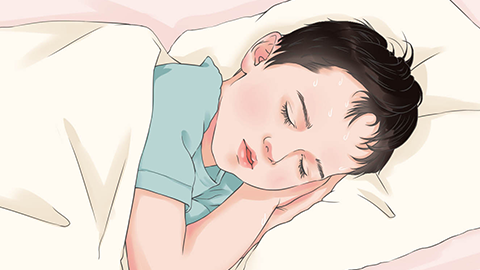
Night sweats refer to episodes of sudden, excessive sweating occurring during sleep, triggered by an underlying primary disease. These episodes are typically intermittent and relatively brief in duration. However, the volume of sweat produced is often substantial—severe cases may even result in complete saturation of bedclothes.
In daily life, patients should maintain a positive mental outlook, actively cooperate with their physicians’ treatment plans, take prescribed medications consistently and as directed, and pay close attention to routine self-care—thereby facilitating prompt clinical improvement. We hope this information proves helpful to you.






