What Is Syphilis Rash?
Apr 13, 2021
Source: Cainiu Health

Dr. Li Ruizhi
Introduction
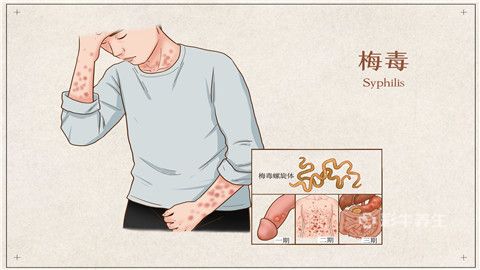
Syphilitic rash is the primary clinical manifestation of secondary syphilis and mainly presents as various cutaneous and mucosal lesions, including macular, papular, maculopapular, pustular, and ulcerative types. Syphilitic rashes can mimic other dermatoses. Lesions in secondary syphilis contain abundant *Treponema pallidum*, rendering them highly infectious. The causative pathogen is *Treponema pallidum*, a small, slender, spiral-shaped microorganism.
Syphilis is a chronic, classic sexually transmitted infection caused by *Treponema pallidum*, the pale spirochete. It can affect virtually any organ system in the body, producing a wide variety of clinical signs and symptoms. The disease may also remain latent for many years without causing noticeable symptoms. So, what exactly is syphilitic rash? The following section addresses this question.

Syphilitic rash is the predominant clinical manifestation of secondary syphilis. It primarily presents as various cutaneous and mucosal lesions—including macular, papular, maculopapular, pustular, and ulcerative types. Syphilitic rashes often mimic other dermatological conditions. Lesions in secondary syphilis contain abundant *Treponema pallidum*, rendering them highly infectious. The causative pathogen, *Treponema pallidum*, is a small, slender, spiral-shaped microorganism. Due to its transparency and inability to retain conventional stains, it is termed the “pale spirochete.” *T. pallidum* does not survive well outside the human body; it is readily killed by boiling, drying, soapy water, and common disinfectants such as mercuric chloride, carbolic acid (phenol), and alcohol. It dies within 1–2 hours at 41–42°C but can remain viable for several years under low-temperature conditions, retaining its morphology, motility, and virulence. *T. pallidum* reproduces via transverse fission.

Knowledge Extension: Symptoms of Syphilis
1. Primary Syphilis Symptoms
Primary syphilis commonly manifests as a papule. As the disease progresses, this lesion rapidly ulcerates into a small, round, red ulcer approximately 1–2 cm in diameter. It is typically covered with a small amount of serous exudate. Inguinal lymphadenopathy may accompany the lesion; however, the enlarged lymph nodes are neither erythematous nor tender, and no suppuration occurs.
2. Secondary Syphilis Symptoms
Symptoms of secondary syphilis are more pronounced than those of primary syphilis. As *Treponema pallidum* disseminates from regional lymph nodes into the bloodstream and multiplies rapidly throughout the body, systemic manifestations develop. These commonly include low-grade fever, headache, myalgia, arthralgia, and generalized lymphadenopathy.
3. Tertiary Syphilis Symptoms
A hallmark feature of tertiary syphilis is the gumma (also known as a syphilitic gumma). Initially, a small, firm nodule forms—usually few in number. As the disease advances, these nodules gradually enlarge and become adherent to the overlying skin, forming dark-red, infiltrated plaques. The central portion softens progressively and ulcerates, discharging thick, gelatinous material.
The above provides an overview of what syphilitic rash is. We hope this information proves helpful.