


What is hypertrophic scarring?
Dec 30, 2024
Source: Cainiu Health

Dr. Liu Wenmin
Introduction
Hypertrophic scars are the result of excessive proliferation of fibrous connective tissue during skin wound healing, often triggered by improper diet, infections, and other factors. They commonly occur at sites of deep wounds. The main manifestations include rough scar surface, abnormal coloration, and possible symptoms such as itching, burning sensation, and tension. Smaller scars can be treated with medication. If symptoms are significant, prompt surgical treatment according to medical advice is recommended.
Generally speaking, scar hyperplasia refers to hypertrophic scars. A hypertrophic scar is characterized by excessive proliferation of fibrous connective tissue during the wound healing process after skin injury. If the scar affects appearance, it is recommended to seek timely medical treatment. Detailed explanation is as follows:
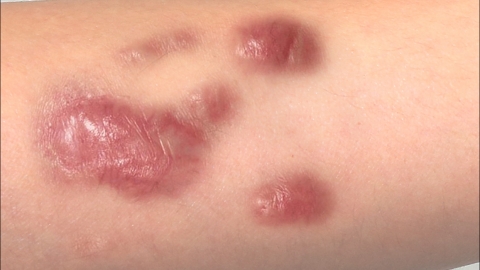
When the skin suffers trauma, such as cuts, burns, or surgical wounds, fibroblasts become overly active during the healing process, causing the scar tissue to thicken and elevate progressively, eventually forming a hypertrophic scar. This condition is commonly associated with improper diet and infection, among other factors. Scars that are deeper in the skin have a higher likelihood of developing into hypertrophic scars.
After a hypertrophic scar has formed, the skin surface may appear rough and uneven, with colors ranging from light red, dark red, to even brown. Some patients may experience localized itching, burning sensations, or a feeling of tension. If the hypertrophic scar is small and does not affect appearance, treatment with topical medications such as scar-relief ointments, tretinoin cream, or imiquimod cream may be used under a physician's guidance. If symptoms are significant, surgical treatments are recommended under medical supervision, including excision with skin grafting, flap techniques, or simple excision with suturing.
In addition, after a hypertrophic scar has formed, it is important to maintain local hygiene in daily life to reduce the risk of infection. Furthermore, during the wound healing phase, avoid frequently touching or pulling at the scar to prevent wound bleeding.




