How to Self-Test for a Scar-Prone Constitution
Dec 30, 2024
Source: Cainiu Health

Dr. Liu Wenmin
Introduction
The self-testing methods for a scar-prone constitution mainly include understanding family history, observing wound healing, assessing scar location and morphology, performing a scratch test, and conducting palpation examinations. If you have a scar-prone constitution, you generally have a familial tendency, wounds that heal slowly and protrude, fixed scar locations and shapes, red linear elevations after scratching that last for a long time, and scars with a hard texture accompanied by tenderness or itching.
Generally speaking, scar-prone constitution refers to a瘢痕体质 (scar-prone constitution). Self-assessment methods for瘢痕体质 mainly include understanding family genetic history, observing wound healing conditions, observing scar location and morphology, performing a scratch test, and conducting a palpation examination. Detailed explanations are as follows:
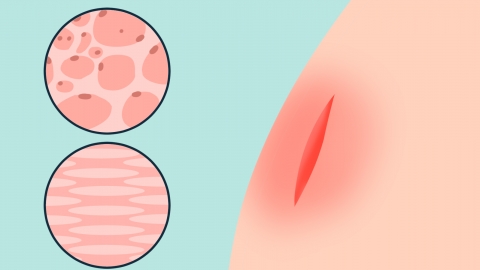
1. Understand the Genetic History
瘢痕体质 (scar-prone constitution) has a certain genetic tendency. If there are individuals with瘢痕体质 in the family, the likelihood of offspring developing the condition is relatively high. Therefore, such individuals should be cautious about the possibility of forming hypertrophic scars after sustaining injuries.
2. Observe Wound Healing
When individuals with瘢痕体质 sustain skin injuries, such as cuts, scrapes, or incisions, their skin healing capacity is relatively poor, requiring a longer recovery time. During the healing process, the scars tend to protrude from the skin surface. Additionally, the surrounding tissue tends to be harder in texture, with deeper pigmentation that may appear black or brown.
3. Observe Scar Location and Morphology
Scars formed by individuals with瘢痕体质 typically appear in certain fixed locations, such as the upper central chest, shoulders, and upper arms. Moreover, the morphology of the scars is also relatively consistent, usually presenting as nodular, oval, or tumor-like growths.
4. Scratch Test
The scratch test is a commonly used self-assessment method. It involves using a sterilized needle to make a small incision on the inner side of the arm or thigh, followed by observation over 7–14 days. If a red, raised line appears at the scratched site and persists for a long time, it is often indicative of瘢痕体质 (scar-prone constitution).
5. Palpation Examination
Direct palpation of the scar area can be performed. Typically, scars formed by individuals with瘢痕体质 feel hard in texture and have poor elasticity. They are often accompanied by discomfort symptoms such as tenderness and itching.
If you suspect that you have瘢痕体质 (scar-prone constitution), it is advisable to seek medical evaluation at a hospital as soon as possible to allow timely, targeted treatment based on diagnostic results. If diagnosed with瘢痕体质, it is best to avoid injuries as much as possible to reduce the risk of developing hypertrophic scars.