


How to Identify a Scar-Prone Constitution
Jan 25, 2025
Source: Cainiu Health

Dr. Liu Wenmin
Introduction
A scar-prone constitution can be identified through methods such as reviewing family history, observing skin condition, examining for presence of scars, physician evaluation, and specialized tests. These methods can analyze factors such as skin lesion conditions and scar pigmentation. If a scar-prone constitution is suspected, diagnosis should be made under a physician's guidance using relevant examinations, such as local cell testing and histopathological analysis.
Generally speaking, scar-prone constitution refers to a瘢痕体质 (scar-prone体质). Methods for identifying a scar-prone constitution mainly include understanding family history, observing skin condition, examining for presence of scars, physician evaluation, and professional examinations. If discomfort occurs, timely medical consultation is necessary. Detailed analysis is as follows:
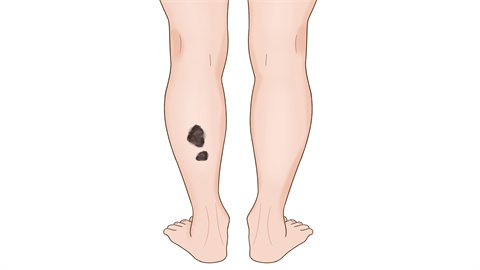
1. Understand Family History
Scar-prone体质 typically demonstrates familial inheritance tendencies. If either parent has a scar-prone体质, the likelihood of passing it on to offspring is relatively high. Therefore, individuals from such families should pay special attention to prevention and avoid injuries.
2. Observe Skin Condition
Individuals with a scar-prone体质 tend to develop noticeable scars after injuries. Even minor injuries such as mosquito bites or acne may result in skin marks, possibly accompanied by symptoms like redness and itching.
3. Examine for Presence of Scars
If someone has a scar-prone体质, wound healing tends to be slower, and excessive scar proliferation is common, potentially causing the affected skin to appear deep red or dark purple.
4. Physician Evaluation
If you suspect you have a scar-prone体质, it is recommended to seek timely medical attention at a hospital, where a qualified physician can determine if you have this体质 based on skin color, scar size, and skin texture.
5. Professional Examinations
If a physician suspects a scar-prone体质, further analysis may involve local cell testing, histopathological examination, immunoglobulin testing, and other diagnostic methods commonly used for identifying scar-prone体质.
It should be noted that if diagnosed with a scar-prone体质, appropriate preventive measures should be taken along with early treatment to reduce scar size. Additionally, during the wound healing period, avoid frequently touching the affected area with your hands.





