


Can the ovulation date be used to calculate the due date?
Mar 03, 2025
Source: Cainiu Health

Dr. Zhang Lu
Introduction
Under normal circumstances, women with regular menstrual cycles can use the ovulation date to help calculate the estimated due date; however, women with irregular menstrual cycles are not advised to use the ovulation date for this purpose. If the exact ovulation date or conception date is known, the estimated due date can be calculated. Nevertheless, for women with irregular menstrual cycles, relying solely on the ovulation date to determine the estimated due date is inaccurate.
Generally, women with regular menstrual cycles can use their ovulation date to help calculate the estimated due date; however, women with irregular menstrual cycles are not advised to use the ovulation date for estimating the due date. Detailed explanations are as follows:
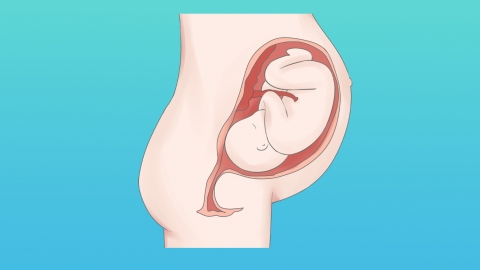
For women with regular menstrual cycles, if the exact ovulation date or date of conception is known, these dates can be used to estimate the due date. By counting 38 weeks from the date of conception, a relatively accurate estimated due date can be determined. This method provides a precise estimation of the due date and is especially suitable for women with irregular menstrual cycles or those who cannot recall the first day of their last menstrual period.
However, for women with irregular menstrual cycles or those unable to determine the exact ovulation date, calculating the due date based solely on the ovulation date may be inaccurate. Uncertainty in determining the ovulation date could lead to significant errors in the estimated due date. In such cases, it is recommended to use the last menstrual period (LMP) method or early ultrasound examination to determine the due date.
The estimated due date is only a projected time of delivery and not an exact date. Therefore, delivering one to two weeks before or after the due date is considered normal. If labor has not started two weeks past the due date, post-term pregnancy should be considered, and medical attention should be sought promptly.





