


What Causes a Baby's Belly Button to Protrude?
Mar 17, 2025
Source: Cainiu Health

Dr. Zhou Xiaofeng
Introduction
Obese infants tend to accumulate more fat in the body, which increases pressure on the abdominal wall, causing the navel area to protrude outward. This may be accompanied by symptoms such as excess weight and fat accumulation. Weight reduction through dietary control and appropriate physical activity can help improve the condition. For example, infants can consume low-calorie foods and engage in suitable exercises such as infant gymnastics.
Protrusion of an infant's navel may be caused by obesity, umbilical hernia, rectus abdominis diastasis, omphalitis, or congenital hypothyroidism. Management depends on the specific situation, and parents should promptly take the infant to the hospital for diagnosis and treatment to determine the cause through examination and then proceed accordingly.
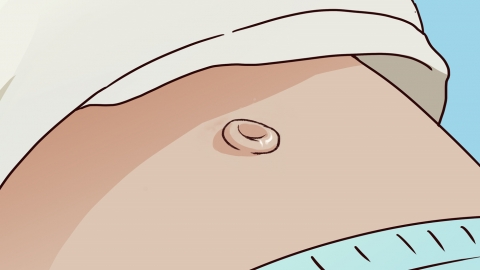
1. Obesity: Obese infants tend to accumulate more fat, increasing abdominal wall pressure and causing the navel area to protrude outward. This may be accompanied by symptoms such as excess weight and fat accumulation. Weight reduction through dietary control and appropriate exercise can help improve the condition. For example, incorporating low-calorie foods and suitable infant exercises like baby gymnastics may be beneficial.
2. Umbilical Hernia: In infants, the umbilical ring may not be fully closed due to incomplete development of the umbilical area. When intra-abdominal pressure increases, such as during crying or coughing, abdominal contents may protrude through the umbilical ring, causing the navel to bulge. Most umbilical hernias resolve spontaneously within 1-2 years. During this time, efforts should be made to reduce the infant's crying and coughing. Umbilical hernia belts may be used as an adjunct, but must be applied correctly under a doctor's guidance.
3. Rectus Abdominis Diastasis: The abdominal muscles of infants are not yet fully developed, particularly at the area where the rectus abdominis muscles meet around the navel. When the baby exerts effort, the navel area is prone to protrusion. Usually, no other discomfort is present, and the condition improves as the infant grows and the muscles strengthen. Avoid excessive straining by the infant, such as prolonged crying. Under a doctor's guidance, gentle abdominal massage may be performed to promote muscle development.
4. Omphalitis: Bacterial infection due to improper umbilical care can cause inflammation, leading to local tissue swelling and navel protrusion. Symptoms include redness, swelling, and discharge from the umbilical area. In severe cases, there may be an unpleasant odor and fever. Under medical guidance, patients may use medications such as povidone-iodine solution, mupirocin ointment, or cefaclor granules to alleviate symptoms.
5. Congenital Hypothyroidism: Insufficient thyroid hormone secretion leads to slowed metabolism and mucoid edema, which may cause the navel area to protrude. Affected infants often exhibit symptoms such as excessive sleepiness, reduced crying, poor feeding, abdominal distension, and constipation. It is recommended to follow medical advice for treatment with medications such as levothyroxine sodium tablets, thyroid extract tablets, or Yikang capsules to alleviate symptoms.
In daily life, maintain cleanliness and dryness of the umbilical area to avoid friction and impact, promoting healing. Monitor the infant's physical condition regularly and promptly address any abnormalities.
References:
[1] Guan Shujuan, Chen Xiaoping, Wang Li. Treatment of infantile diarrhea with diarrhea-relieving powder applied to the navel: a report of 30 cases[J]. Journal of External Therapy of Traditional Chinese Medicine, 2013, 22(04):35.
[2] Yao Liangfeng, You Ahua, Ouyang Xin, et al. Clinical value of multi-slice spiral CT in infantile umbilical hernia[J]. Journal of Molecular Imaging, 2024, 47(03):327-330.


