


Which is stronger between Hei Shun Pian and Cinnamon?
Apr 08, 2025
Source: Cainiu Health
Dr. Zhang Xiuhong
Introduction
Under normal circumstances, both Heishunpian (Aconiti Lateralis Radix Praeparata) and cinnamon (Cinnamomi Cortex) have strong effects in warming the yang and dispelling cold. It is difficult to simply determine which one is more potent. When choosing between Heishunpian and cinnamon, decisions should be based on the patient's specific symptoms and constitution, following the principles of syndrome differentiation and treatment in Traditional Chinese Medicine (TCM). These herbs should be used appropriately under the guidance of a qualified physician. Self-diagnosis and usage should be avoided to prevent potential harm to health.
Generally speaking, both Heishunpian (Aconite Root) and cinnamon are effective at warming the yang and dispelling cold, making it difficult to simply determine which is stronger. It is recommended to use any traditional Chinese medicine under the guidance of a physician to ensure its efficacy and safety. Detailed analysis is as follows:
Heishunpian has functions of restoring yang to rescue from collapse, supplementing fire to enhance yang, and dispersing cold to relieve pain. It has a strongly hot nature and is commonly used to treat conditions such as yang collapse syndrome, yang deficiency syndrome, and cold bi syndrome. It can effectively alleviate various types of pain and spasms, including headache, muscle soreness, rheumatic joint pain, etc. Heishunpian has a potent medicinal effect and must be used cautiously to avoid overdose-induced poisoning.
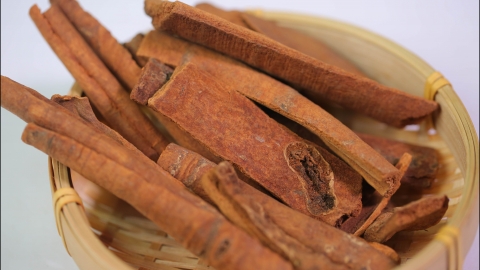
Cinnamon has effects of supplementing fire to enhance yang, dispersing cold to relieve pain, and warming the meridians. It is acrid, sweet, and strongly hot in nature and is commonly used for pain syndromes caused by cold congealing and blood stasis, yin abscesses due to yang deficiency and cold congealing, and floating of deficient yang. Cinnamon is relatively milder but still requires attention to its warming nature, avoiding its use in conditions with heat symptoms or acute inflammation.
When choosing between Heishunpian and cinnamon, the patient's specific symptoms and constitution should be considered, following the principle of TCM syndrome differentiation and treatment. These herbs should be appropriately used under the guidance of a qualified physician. Self-diagnosis and use should be avoided to prevent harm to health.


