Is tapioca starch the same as kudzu starch?
Apr 30, 2025
Source: Cainiu Health

Dr. Zhang Xiuhong
Introduction
Under normal circumstances, cassava starch is not kudzu starch. Cassava starch is extracted from the tuberous roots of cassava, a tropical plant belonging to the Euphorbiaceae family. In contrast, kudzu starch is derived from the tuberous roots of Pueraria lobata or Pueraria thomsonii, plants in the Leguminosae family, and is a processed traditional Chinese medicine product. The source plants of these two types of starch belong to different families and possess fundamental differences in their intrinsic properties. Cassava starch appears white or translucent with a flaky texture and lacks longitudinal wrinkles.
Under normal circumstances, cassava flour is not kudzu root powder. The detailed analysis is as follows:
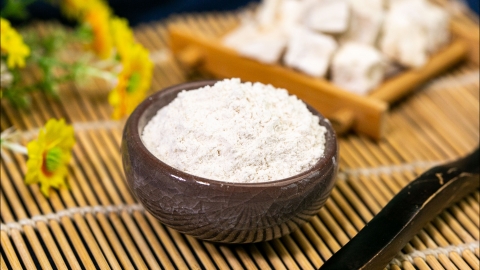
Cassava flour is extracted from the tuberous roots of cassava, a tropical plant belonging to the Euphorbiaceae family; kudzu root powder comes from the tuberous roots of Pueraria lobata or Pueraria thomsonii, which are leguminous plants, and it is a processed product of traditional Chinese medicine. The source plants of these two powders belong to different families and genera, and they fundamentally differ in their essential properties. Cassava flour appears white or transparent flaky with no longitudinal wrinkles; kudzu root powder varies in color, with wild varieties being reddish-brown and cultivated ones being white or off-white, displaying yellowish-white striations on the longitudinal section. When brewed, cassava flour produces a low-viscosity, transparent liquid, while kudzu root powder forms a light yellow, highly viscous solution.
When cooked, cassava flour becomes a transparent, elastic gel with virtually no odor; kudzu root powder forms a gel-like substance with a faint beany smell and a sweet taste, with the wild variety having a more pronounced flavor. There are clear differences between the two in texture, flavor, and solubility characteristics. Cassava flour mainly provides energy and has no specific medicinal value; kudzu root powder, however, possesses medicinal effects such as clearing heat and detoxifying, promoting saliva secretion to relieve thirst, and regulating blood sugar and blood pressure. In traditional medicine, it is used to treat conditions like fever caused by external pathogens and body fluid damage due to heat-related illnesses.
Cassava flour and kudzu root powder significantly differ in their nature, taste, uses, and therapeutic effects. Therefore, cassava flour is not kudzu root powder. When purchasing and using these products, please carefully distinguish between them to avoid confusion.