


Is astigmatism amblyopia?
Nov 18, 2025
Source: Cainiu Health

Dr. Wang Lei
Introduction
Astigmatism is not amblyopia, but the two conditions are closely related. Uncorrected astigmatism, if left untreated, may lead to amblyopia. The key difference lies in the fact that vision impaired by astigmatism can be corrected with glasses, whereas amblyopia requires professional and comprehensive treatment. When vision problems are detected, children should promptly undergo an eye examination to obtain an accurate diagnosis and receive targeted interventions. This helps prevent delayed treatment due to confusion between the two conditions and ensures the protection of visual health.
Astigmatism is not amblyopia, but the two conditions are closely related. Uncorrected astigmatism, if left untreated, may trigger amblyopia. The detailed analysis is as follows:
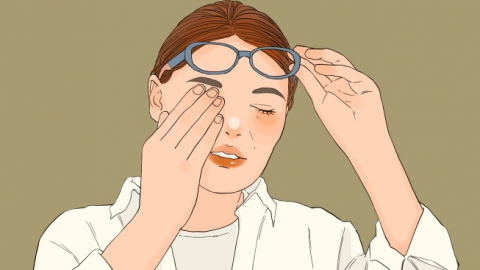
Astigmatism is a common refractive error, primarily caused by an irregular shape of the cornea or lens, which prevents parallel light rays from focusing on a single point within the eye. This often results in symptoms such as double vision or blurriness for both near and distant objects. This condition can be accurately corrected through optometric examination and prescription eyewear. With properly prescribed astigmatic glasses, light focuses correctly on the retina, and vision usually returns to normal quickly. Astigmatism is essentially an optical structural deviation in the eye.
Amblyopia, on the other hand, refers to reduced vision due to abnormal visual development, commonly occurring during the critical period of visual development in children. Some cases of amblyopia are caused by uncorrected high astigmatism. When the retina does not receive clear visual input over a prolonged period, visual function development becomes impaired. Amblyopia cannot be corrected by glasses alone; it requires comprehensive treatment, including optical correction combined with occlusion therapy (patching), fine visual training, and other interventions.
The key distinction between the two lies in treatment: astigmatism can be corrected with glasses, whereas amblyopia requires professional, multifaceted therapy. When vision problems are detected, children should promptly undergo optometric evaluation. After a clear diagnosis, targeted interventions should be implemented immediately to avoid delays caused by confusion between the two conditions, thereby protecting healthy visual development.



