How do birthmarks in newborns form?
Nov 19, 2025
Source: Cainiu Health

Dr. Liu Wenmin
Introduction
Birthmarks in newborns are primarily caused by genetic factors, abnormal aggregation of pigment cells, vascular developmental malformations, prenatal environmental stimuli, and abnormal migration of neural crest cells. Most birthmarks are benign and cause no discomfort. If a birthmark rapidly increases in size, ulcerates, bleeds, or affects appearance, prompt medical evaluation is recommended. Some birthmarks have a hereditary tendency.
Birthmarks in newborns are primarily caused by genetic factors, abnormal aggregation of pigment cells, vascular developmental malformations, prenatal environmental stimuli, and abnormal migration of neural crest cells. Most birthmarks are benign and do not cause discomfort. However, if a birthmark rapidly increases in size, ulcerates, bleeds, or affects appearance, prompt medical evaluation is recommended.
1. Genetic factors: Some birthmarks have a hereditary tendency. If parents or family members have similar birthmarks, the likelihood of a newborn developing them increases. The inheritance pattern is typically autosomal dominant.
2. Abnormal pigment cell aggregation: During embryonic development, abnormalities in the migration and differentiation of skin pigment cells can lead to excessive accumulation of pigment cells in localized areas, resulting in pigmented birthmarks such as Mongolian spots and café-au-lait spots. These are usually brown, black, or blue in color.
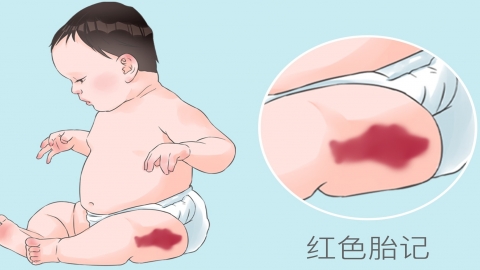
3. Vascular developmental malformations: Immature development of the vascular system during embryogenesis may lead to abnormal blood vessel proliferation, dilation, or structural defects, forming vascular birthmarks such as port-wine stains and strawberry hemangiomas. These typically appear as red or pink patches.
4. Prenatal environmental stimuli: Exposure of the mother to chemicals, radiation, viral infections, or hormonal fluctuations during pregnancy may interfere with fetal skin tissue development and trigger birthmark formation, particularly during the first trimester when the impact is more pronounced.
5. Abnormal neural crest cell migration: Neural crest cells are precursors to pigment cells and vascular endothelial cells. Disruption in their migration pathway or differentiation process during embryonic development can result in local tissue abnormalities and the formation of various types of birthmarks.
Most benign birthmarks do not require treatment. If appearance is a concern, treatments such as laser therapy or cryotherapy may be considered under medical guidance. Daily care should include avoiding friction or scratching the birthmarked area, maintaining clean and dry skin, monitoring changes in the birthmark, and preventing local injury that could lead to infection.