What is PRP therapy?
Nov 24, 2025
Source: Cainiu Health

Dr. Wang Lei
Introduction
PRP therapy refers to platelet-rich plasma therapy, a medical technique that involves drawing the patient's own blood, centrifuging it to isolate a high concentration of platelet-rich plasma, and then injecting it back into the body to promote tissue repair and regeneration. After treatment, keep the injection site clean and dry, and avoid contact with water for 1–2 days. Avoid taking blood-circulating medications such as aspirin in the short term.
PRP therapy refers to platelet-rich plasma therapy, a medical technique that involves drawing the patient's own blood, centrifuging it to isolate a high-concentration platelet plasma, and then injecting it back into the body to promote tissue repair and regeneration. The detailed analysis is as follows:
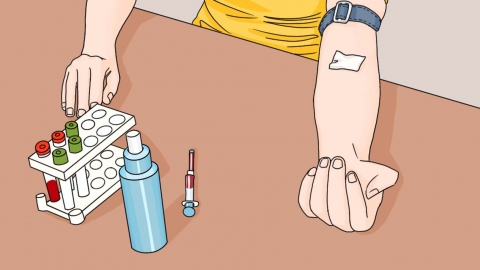
PRP (platelet-rich plasma) therapy involves extracting the patient’s own blood and using centrifugal concentration to obtain plasma rich in platelets and growth factors, which is then injected into the area requiring repair. Growth factors released upon platelet activation stimulate cell proliferation and differentiation, promoting tissue regeneration. Therefore, PRP therapy is used for conditions such as osteoarthritis, tendon injuries, wound healing, and hair loss. By utilizing the body’s own tissue components to repair damage, this treatment offers high safety and minimal risk of immune rejection.
After treatment, keep the injection site clean and dry, avoiding contact with water for 1–2 days. Avoid taking blood-circulating medications such as aspirin in the short term, and refrain from smoking, alcohol, and spicy or irritating foods. If the injection site is a joint, minimize strenuous activity; if it is on the face or scalp, avoid exposure to high-temperature environments. Monitor local reactions closely, and seek prompt medical advice if persistent redness, swelling, pain, or other abnormalities occur.