


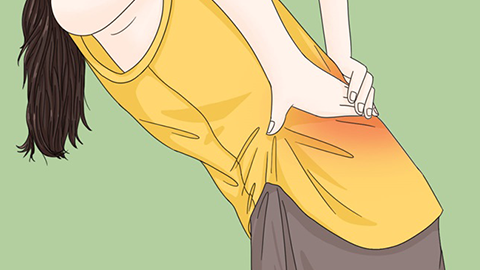
What should I do about lower back pain caused by a herniated lumbar disc?
Nov 25, 2025
Source: Cainiu Health

Dr. Chen Jian
Introduction
Low back pain caused by lumbar disc herniation can be managed through adjusting daily postures, strengthening rehabilitation exercises, relieving symptoms with physical therapy, using medications for pain relief, and, when necessary, surgical intervention. Treatment generally follows a stepwise approach, progressing from conservative to invasive methods. If low back pain worsens continuously and is accompanied by leg weakness or bladder/bowel dysfunction, prompt medical evaluation is recommended.
Lumbar disc herniation causing lower back pain can be managed through methods such as adjusting daily posture, strengthening rehabilitation exercises, physical therapy for symptom relief, medication for pain control, and surgical intervention when necessary. A stepwise approach should be followed, progressing from conservative to invasive treatments. If lower back pain worsens continuously and is accompanied by leg weakness or urinary/bowel dysfunction, prompt medical attention is recommended.
1. Adjust Daily Posture: Avoid prolonged sitting or standing and repeated bending at the waist. When sitting, use a lumbar cushion to maintain the spine’s natural curve; stand with chest lifted and abdomen drawn in. Use leg strength when lifting heavy objects, and choose a mattress of medium firmness to reduce continuous pressure on the lumbar spine.
2. Strengthen Rehabilitation Exercises: After pain subsides, begin core-strengthening exercises such as the five-point support, "flying swallow," and gluteal bridge to enhance the supporting capacity of back and abdominal muscles, improve lumbar stability, and gradually progress without overexertion.
3. Physical Therapy for Symptom Relief: Lumbar traction can help widen the intervertebral space and relieve nerve compression. Heat therapy, ultrasound, and electrical stimulation improve local blood circulation, relax muscle spasms, and reduce inflammation and discomfort.
4. Medication for Pain Relief: Under professional guidance, nonsteroidal anti-inflammatory drugs (NSAIDs) may be used to reduce inflammation, or muscle relaxants prescribed to alleviate muscle tension. Avoid long-term self-medication and monitor for drug tolerance.
5. Surgical Intervention When Necessary: If conservative treatment fails after more than three months or symptoms worsen, procedures such as nucleotomy or spinal fusion may be considered to relieve nerve compression. Surgery must be carefully evaluated based on strict indications and the patient's overall health condition.
In daily life, keep the lower back warm to prevent cold exposure, maintain a healthy weight to reduce spinal load, avoid strenuous activities and sudden twisting motions, and follow a regular routine to allow adequate rest for the back muscles and intervertebral discs, promoting recovery.


