


What are ear stones?
Nov 27, 2025
Source: Cainiu Health

Dr. Lu Cheng
Introduction
If otoliths become dislodged due to trauma, aging, inner ear diseases, or other causes, they may move out of their original position and enter the semicircular canals. When the head moves, these displaced otoliths float within the fluid of the semicircular canals, abnormally stimulating hair cells and sending confusing balance signals to the brain, leading to symptoms such as vertigo and nausea. This condition is known as otolith displacement (or benign paroxysmal positional vertigo), and requires professional repositioning treatment to restore the otoliths to their proper location.
Under normal circumstances, otoliths are calcium carbonate crystals in the inner ear responsible for sensing gravity and linear acceleration. They attach to the otolithic membrane and assist in maintaining balance. If abnormalities occur, prompt medical attention is recommended. Detailed analysis is as follows:
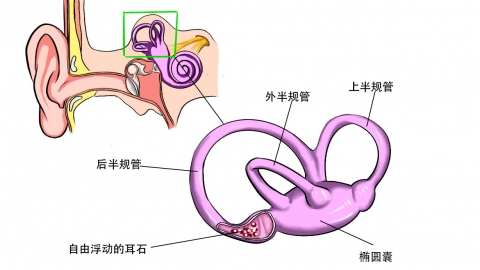
In a healthy state, otoliths firmly adhere to the surface of the otolithic membrane within the utricle and saccule of the inner ear. When the head undergoes linear movement, the otoliths shift along with the membrane, stimulating underlying hair cells to generate nerve signals. These signals are transmitted to the brain, enabling perception of head position changes and helping maintain bodily equilibrium—essential for everyday activities such as walking and standing up.
If otoliths become dislodged due to trauma, aging, or inner ear disorders, they may move out of place and enter the semicircular canals. During head movements, these displaced otoliths float within the fluid of the canals, abnormally stimulating hair cells and sending conflicting balance signals to the brain. This causes symptoms such as vertigo and nausea—a condition known as benign paroxysmal positional vertigo (BPPV). Proper treatment, typically involving specialized repositioning maneuvers, is required to restore the otoliths to their correct position.
If brief episodes of vertigo suddenly occur, especially in association with changes in head position, individuals should avoid vigorous activity and seek timely medical evaluation to determine whether displaced otoliths are the cause. Self-diagnosis should be avoided to prevent delays in appropriate intervention.



