


What are the symptoms of boils and carbuncles?
Nov 28, 2025
Source: Cainiu Health

Dr. Liu Wenmin
Introduction
When boils or carbuncles develop, common symptoms generally include local redness, swelling, prominent pain, increased skin temperature, formation of pus heads, and accompanying systemic discomfort. In the early stages, the affected skin area first shows red patches, which gradually elevate and form firm nodules with relatively clear boundaries. The red and swollen area expands progressively as the condition advances, and palpation reveals hardening of the underlying subcutaneous tissue.
When boils or carbuncles occur, common symptoms generally include local redness and swelling, obvious pain, increased skin temperature, formation of pus heads, and accompanying systemic discomfort. The details are as follows:
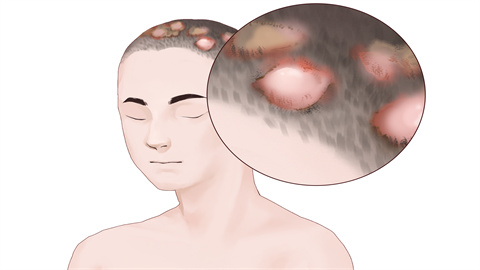
1. Local redness, swelling, and elevation: In the early stage of a boil or carbuncle, the affected skin develops a red patch that gradually swells and forms a firm nodule with relatively clear boundaries. The swollen area expands progressively as the condition worsens. Palpation reveals hardened subcutaneous tissue, which is a typical manifestation of inflammatory response caused by bacterial infection.
2. Obvious pain: Due to inflammatory stimulation, the affected area experiences persistent pain that intensifies as inflammation progresses. Pain becomes more pronounced upon pressure or movement and may severely affect daily activities. Pain is especially prominent when boils develop in areas prone to friction, such as limbs or the neck.
3. Increased skin temperature: Localized inflammation accelerates blood circulation, causing the skin temperature in the affected area to be significantly higher than that of surrounding normal skin. A noticeable temperature difference can be felt upon touch. The area of elevated temperature generally corresponds to the extent of redness and swelling, indicating active inflammation.
4. Formation of pus heads: As the condition advances, the center of the boil softens gradually and develops a yellowish-white pus head. Some pus heads may rupture spontaneously, discharging yellow pus. Pain may temporarily subside after pus drainage, but proper wound care is essential to prevent the spread of infection.
5. Accompanying systemic discomfort: If the infection covers a large area or the patient has weakened immunity, systemic symptoms may appear, such as fever, fatigue, and loss of appetite. Body temperature is usually low-grade or moderately elevated, suggesting a possible systemic inflammatory response, which requires timely medical intervention.
Upon noticing symptoms of boils or carbuncles, avoid squeezing or puncturing the lesion to prevent spreading the infection. Seek prompt medical attention if the pus head ruptures or if symptoms like fever develop.




