


What causes redness in indented scars?
Nov 28, 2025
Source: Cainiu Health

Dr. Liu Wenmin
Introduction
In general, redness in depressed scars may be caused by the skin's self-repair process, local irritation, scar hypertrophy, infection, or contact dermatitis. When such conditions occur, timely medical consultation is recommended to identify the underlying cause and receive targeted treatment. After skin injury, during the self-repair process, new blood vessels form to supply nutrients for healing, which may lead to redness in the area of the depressed scar.
Generally, redness in atrophic scars may result from natural skin repair, local irritation, scar hyperplasia, infection, or contact dermatitis. If such conditions occur, it is advisable to seek medical attention promptly to determine the underlying cause and receive targeted treatment. Specific causes are analyzed as follows:
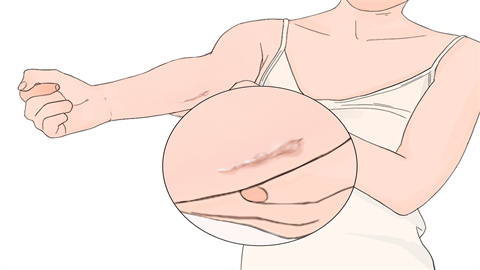
1. Skin self-repair: After skin injury, during the natural healing process, new blood vessels form to supply nutrients for tissue repair, which may cause redness in atrophic scars. This is a normal physiological phenomenon that does not require special treatment. Over time, the redness usually fades gradually.
2. Local irritation: Atrophic scars may become red due to inflammation caused by friction, scratching, or ultraviolet exposure. Avoid excessive irritation to the scar area, take proper sun protection measures, wear loose and comfortable clothing, and minimize friction.
3. Scar hyperplasia: Abnormal overgrowth of scar tissue during healing can lead to rich formation of new blood vessels, causing redness in the atrophic scar, often accompanied by itching or pain. Under professional guidance, topical medications such as asiaticoside cream, mucopolysaccharide polysulfate cream, or compound heparin sodium allantoin gel may be used to suppress scar proliferation and promote softening of the scar.
4. Infection: When the skin over an atrophic scar breaks down, bacteria may invade and cause infection, resulting in redness, swelling, and pain; in severe cases, purulent discharge may occur. Under medical supervision, topical antibiotics such as mupirocin ointment, fusidic acid cream, or erythromycin ointment can be applied to treat the infection. Keep the scar area clean and dry.
5. Contact dermatitis: Exposure of the skin around the atrophic scar to allergens or irritants may trigger contact dermatitis, leading to redness, rash, and itching. Under a physician's guidance, topical corticosteroids such as hydrocortisone butyrate cream, mometasone furoate cream, or halometasone cream may be used to reduce inflammatory reactions, and re-exposure to the allergen should be avoided.
In daily life, maintain cleanliness of the scar area, avoid scratching, and prevent infection. Follow a light diet and avoid spicy or irritating foods. Regularly monitor changes in the scar and consult a doctor promptly if any abnormalities occur.





