


Is there no accurate value when the surface antigen >250 IU/ml?
Dec 02, 2025
Source: Cainiu Health

Dr. Huang Yuhong
Introduction
If conventional qualitative or semi-quantitative detection methods (such as colloidal gold assay or routine enzyme-linked immunosorbent assay) are used, the upper limit of detection range for these methods is mostly set at 250 IU/ml. When the concentration of surface antigen exceeds this threshold, the test result will only show ">250 IU/ml" without providing a more precise numerical value. Such tests are primarily used to determine whether an infection is present.
Under normal circumstances, when the surface antigen level exceeds 250 IU/ml, conventional testing methods may not provide an accurate quantitative value. When the concentration reaches the upper limit of the detection range, standard methods simply report a positive result, while specialized tests are required to obtain a specific numerical value. If there are concerns, it is recommended to consult a healthcare provider in advance. Detailed explanations are as follows:
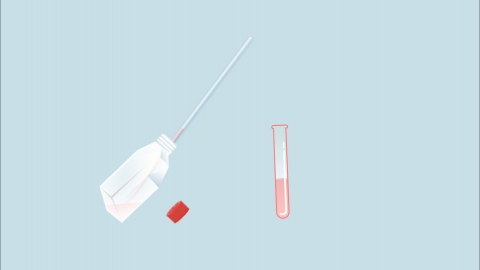
If conventional qualitative or semi-quantitative methods (e.g., colloidal gold assay, standard enzyme-linked immunosorbent assay) are used, the upper detection limit is typically set at 250 IU/ml. When the surface antigen concentration exceeds this threshold, the test result will only be reported as ">250 IU/ml," without providing a more precise value. These methods are primarily intended to determine whether infection is present and do not require exact values at very high concentrations, meeting basic clinical diagnostic needs.
If highly sensitive quantitative methods (e.g., chemiluminescence immunoassay, real-time fluorescent quantitative PCR) are used, the detection range can extend far beyond 250 IU/ml—some assays can measure up to several thousand or even tens of thousands of IU/ml—allowing accurate determination of specific values above 250 IU/ml. Doctors may recommend these methods when assessing viral replication activity or treatment response (such as changes in antigen levels after antiviral therapy), as precise numerical results are essential for guiding clinical decisions.
When a surface antigen test result shows >250 IU/ml, patients should consult their doctor to determine whether further quantitative testing is necessary. For treatment monitoring, highly sensitive quantitative methods are recommended. Test results should be interpreted together with other hepatitis B markers (e.g., hepatitis B serology panel, viral DNA levels) to allow physicians to comprehensively evaluate disease status and develop appropriate follow-up management plans.




