


What is the difference between fried Bai Zhu and raw Bai Zhu?
Dec 10, 2025
Source: Cainiu Health

Dr. Sun Lianqing
Introduction
The differences between fried Atractylodes (Jiao Baizhu) and raw Atractylodes (Baizhu) generally include processing methods, thermal properties, therapeutic emphasis, indications, and dosage. Baizhu is the dried rhizome of Atractylodes macrocephala Koidz. (a member of the Asteraceae family), processed by removing impurities, washing, moistening, slicing into thick pieces, and drying. Jiao Baizhu is prepared by stir-frying the Baizhu slices in a pan over medium heat until the surface turns dark brown and the inside becomes yellowish-brown, then removing and cooling.
There are generally differences between fried Atractylodes (Jiao Baizhu) and raw Atractylodes (Baizhu) in terms of processing methods, thermal properties, functional emphasis, applicable conditions, and usage dosage. The specific analysis is as follows:
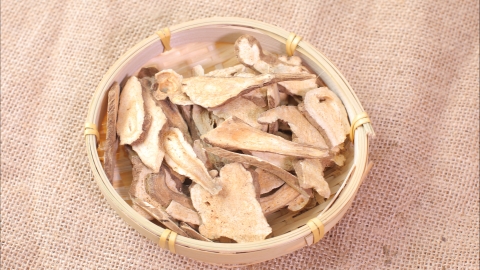
1. **Processing Methods**: Baizhu refers to the dried rhizome of *Atractylodes macrocephala* Koidz. (a member of the Asteraceae family), which is processed by removing impurities, washing, softening, slicing thickly, and drying. Jiao Baizhu, on the other hand, is made by heating slices of Baizhu in a pan over medium heat until the outer surface turns charred brown and the inside becomes yellowish-brown, then cooling after removal. The key difference lies in whether the herb undergoes stir-frying and charring.
2. **Thermal Nature**: Raw Baizhu has a warm nature with a bitter-sweet taste, and its property is mild—tonifying without causing excessive dryness or heat. After stir-frying, Jiao Baizhu's coolness is reduced while its warmth slightly increases, making it more warming in nature. It is therefore better suited for individuals with spleen and stomach deficiency-cold, avoiding the slight cooling effect that raw Baizhu may exert.
p>3. **Functional Emphasis**: The core functions of raw Baizhu include strengthening the spleen and boosting qi, drying dampness, promoting urination, stopping sweating, and stabilizing pregnancy. Its main focus lies in invigorating the spleen and resolving dampness, offering broad therapeutic effects. In contrast, due to the stir-frying process, Jiao Baizhu exhibits enhanced effects in strengthening the spleen and stopping diarrhea. Its primary actions shift toward spleen tonification, anti-diarrheal, and astringent effects, while its ability to dry dampness and promote urination diminishes somewhat, concentrating more on regulating digestive function of the spleen and stomach.4. **Applicable Conditions**: Raw Baizhu is suitable for fatigue, poor appetite, and abdominal distension caused by spleen qi deficiency, as well as edema, phlegm-fluid retention, and spontaneous sweating due to excess dampness from spleen deficiency. It can also be used during pregnancy to stabilize the fetus when there is spleen qi weakness. Jiao Baizhu is more appropriate for symptoms such as indigestion, chronic diarrhea, and loose stools resulting from spleen and stomach deficiency.
5. **Usage and Dosage**: Both herbs have similar typical decoction dosages, usually 6–12 grams. However, their applications differ. Raw Baizhu can be decocted alone or combined with other herbs and is suitable for long-term regulation of spleen qi deficiency. Jiao Baizhu is typically used in formulas specifically targeting diarrhea and spleen deficiency. For acute diarrhea, dosage adjustments may be made under medical supervision, but prolonged use as a single herb is not recommended.
The choice between Jiao Baizhu and raw Baizhu should be based on specific symptoms. Both should be used under the guidance of a qualified practitioner. Raw Baizhu should be used cautiously in patients with cold deficiency of the spleen and stomach, while Jiao Baizhu should be carefully selected in cases of diarrhea due to damp-heat.




