


What causes a hard lump inside the ear?
Aug 18, 2026
Source: Cainiu Health

Dr. Lu Cheng
Introduction
A hard lump inside the ear may result from conditions such as localized follicular keratosis, external pressure or irritation, furunculosis of the external auditory canal, sebaceous cyst of the external auditory canal, or inflammatory nodules of the external auditory canal. Improvement can be achieved by minimizing local contact, protecting the ear, and using appropriate medications. However, if the lump continues to enlarge and is accompanied by pain, prompt medical evaluation is necessary.
A hard lump inside the ear may result from localized follicular keratosis, external mechanical pressure or irritation, external otitis (furuncle), sebaceous cyst of the external auditory canal, or inflammatory nodules of the external auditory canal. Symptoms can be improved by minimizing local contact, protecting the ear, and using appropriate medications. However, if the lump continues to enlarge and is accompanied by pain, prompt medical evaluation is essential.
1. Localized follicular keratosis: Abnormal follicular metabolism in the ear canal leads to accumulation of keratinized material, forming a small, firm, raised lesion. Typically, there is no significant pain; however, a hard nodule can be palpated upon touch. Avoid scratching or squeezing the area with fingers, minimize friction from earphones, and maintain proper ear hygiene.
2. External mechanical pressure or irritation: Frequent ear cleaning (e.g., with cotton swabs) or prolonged use of in-ear headphones may cause compensatory hyperplasia of local tissues. This results in a small, firm nodule within the ear canal—usually without obvious erythema or swelling—but mild discomfort may occur upon palpation. Reduce the frequency of ear cleaning, avoid extended use of in-ear headphones, and minimize localized pressure on the ear canal.
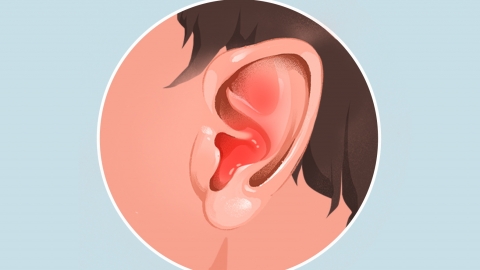
3. External otitis (furuncle): Bacterial infection of an ear canal hair follicle triggers an acute inflammatory response, causing localized swelling and elevation. A firm, tender nodule develops, often with marked tenderness upon pressure; later stages may involve erythema, warmth, and fever. Under physician guidance, topical mupirocin ointment, oral cefuroxime axetil tablets, and ibuprofen sustained-release capsules may be used to alleviate symptoms.
4. Sebaceous cyst of the external auditory canal: Obstruction of a sebaceous gland duct impedes normal secretion drainage, leading to localized accumulation of secretions. This forms a well-demarcated, firm nodule; secondary infection may cause pain and progressive enlargement. Under medical supervision, patients may use topical erythromycin ointment, oral cefixime capsules, and ofloxacin ear drops to relieve discomfort.
5. Inflammatory nodule of the external auditory canal: Recurrent inflammation of the ear canal induces fibrous tissue hyperplasia, resulting in nodular changes. A firm, hard nodule is present within the ear canal, sometimes associated with intermittent dull ear pain that worsens upon palpation. As prescribed, fusidic acid cream, oral roxithromycin dispersible tablets, and diclofenac sodium sustained-release tablets may help improve symptoms.
In daily life, avoid excessive ear canal cleaning, limit use of in-ear headphones, keep the ear canal dry and clean, and prevent repeated friction against the ear canal skin to reduce the risk of developing hyperplastic nodules.



