What Is Citrus aurantium (Fructus Aurantii)?
Apr 14, 2022
Source: Cainiu Health

Dr. Zhang Xiuhong
Introduction
Citrus aurantium (Fructus Aurantii) is the dried, immature fruit of Citrus aurantium L. or its cultivated varieties from the Rutaceae family, processed and used medicinally. Dried Fructus Aurantii appears hemispherical, with a brownish to dark brown exocarp bearing granular protuberances; each protuberance’s apex contains a depressed oil gland. Distinct remnants of the style or fruit stalk scars are clearly visible. Fructus Aurantii is bitter, pungent, and sour in taste, slightly cold in nature; its bitterness confers descending and draining effects as well as dampness-drying properties.
Fructus Aurantii (Zhǐ Qiào) is a traditional Chinese medicinal herb derived from the dried, immature fruits of *Citrus aurantium* L. and its cultivated varieties—plants belonging to the Rutaceae (Rue) family. The analysis is as follows:
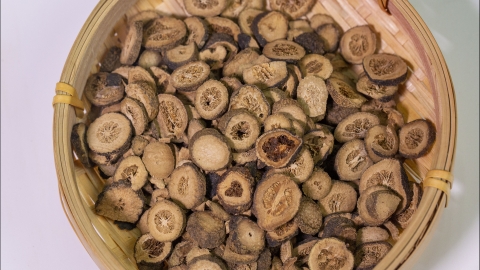
Fructus Aurantii is prepared by drying the immature fruits of *Citrus aurantium* L. and its cultivated varieties (Rutaceae family), followed by appropriate processing (pao zhi) prior to clinical use. Dried Fructus Aurantii appears hemispherical in shape; the exocarp is brownish to dark brown, bearing granular protuberances, each topped with a depressed oil gland. Distinct remnants of the style or fruit stalk scars are readily visible.
Fructus Aurantii possesses bitter, pungent, and sour flavors, with a slightly cold nature. Its bitterness confers descending and draining actions, as well as damp-drying properties; its pungency promotes dispersion and facilitates the smooth flow of Qi and blood; its sourness provides an astringent effect; and its slightly cold nature reflects its heat-clearing function. Consequently, Fructus Aurantii is commonly employed in clinical TCM practice for digestive disorders—including epigastric pain, indigestion, and constipation—as well as for respiratory conditions characterized by Qi stagnation and phlegm obstruction, such as productive cough, excessive sputum, and chest tightness.
Fructus Aurantii is frequently combined with other herbs—including Platycodon root (Jie Geng), Atractylodes rhizome (Bai Zhu), Bupleurum root (Chai Hu), Chuanxiong rhizome (Chuan Xiong), and Cyperus rhizome (Xiang Fu)—to enhance therapeutic efficacy. It should always be used under the guidance of a qualified TCM practitioner to ensure safe and effective administration.