


Can prostate calcification be cured?
Apr 20, 2022
Source: Cainiu Health

Dr. Wang Jianlong
Introduction
Currently, there are no medications available to eliminate prostate calcifications or calcified foci. Moreover, prostate calcification primarily results from a history of chronic prostatitis, which leads to obstruction of the prostatic ducts. As a consequence, crystalline debris in the prostatic fluid cannot be expelled through the prostatic ducts into the urethra and out of the body; instead, it accumulates over time within the prostate gland, forming calcified plaques or calcified foci—conditions that cannot be resolved with medication.
Some individuals diagnosed with prostatic calcifications experience a certain degree of impact on their daily life and studies, yet remain uncertain whether this condition is treatable. So, can prostatic calcifications be cured?
Can Prostatic Calcifications Be Cured?
Firstly, prostatic calcifications generally do not require treatment, and currently no medications exist to eliminate them or resolve prostatic calcification foci. Prostatic calcifications primarily result from a history of chronic prostatitis, leading to obstruction of the prostatic ducts. As a consequence, crystalline debris in prostatic fluid cannot be expelled via the prostatic ducts into the urethra and out of the body; instead, it accumulates over time within the prostate gland, forming calcifications or calcified foci—none of which can be removed pharmacologically.

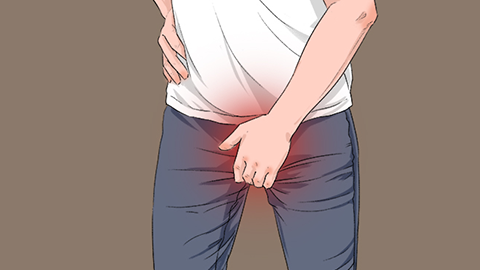
However, it is important to note that prostatic calcifications themselves pose no adverse effects on prostate health or the patient’s overall well-being; therefore, excessive concern or treatment is unnecessary. Patients experiencing nocturia more than three times per night or exhibiting significant urinary symptoms—such as difficulty initiating urination, weak urinary stream, or urinary hesitancy—should consult a urologist to evaluate for possible concomitant benign prostatic hyperplasia (BPH). If BPH is confirmed, medications such as tamsulosin (Flomax®) or dutasteride (Avodart®) may be prescribed.
The above medications are provided for informational purposes only; actual use must be guided by a qualified physician. Additionally, individuals experiencing relevant symptoms should seek timely medical evaluation and follow appropriate management recommendations under professional medical supervision. We hope this information proves helpful to you!






