What does “left occiput anterior (LOA)” mean?
May 13, 2022
Source: Cainiu Health

Dr. Chen Zhe
Introduction
Fetal position during pregnancy is decisive in determining whether the fetus can be delivered vaginally. The most common fetal position is left occiput anterior (LOA). “Left occiput anterior” describes the relationship between the presenting part of the fetus and the maternal pelvis: “left” indicates that the presenting part lies on the left side of the maternal pelvis; “occiput” signifies that the fetal occiput is the presenting part; and “anterior” means that the occiput is positioned in the front (anterior) portion of the maternal pelvis.
Fetal position refers to the relationship between the part of the fetus that presents first (i.e., the presenting part) and the anterior, posterior, left, and right aspects of the maternal pelvis. Left occiput anterior (LOA) is the most common fetal position. What, then, does “left occiput anterior” mean?
What Does “Left Occiput Anterior” Mean?
During pregnancy, fetal position plays a decisive role in determining whether vaginal delivery is feasible. Among all positions, left occiput anterior (LOA) is the most common, with “LOA” being its standard English abbreviation. “Left occiput anterior” describes the relationship between the fetal presenting part and the maternal pelvis: “left” indicates that the presenting part lies on the left side of the maternal pelvis; “occiput” signifies that the fetal occiput (the back of the fetal head) is the presenting part; and “anterior” means the occiput is positioned toward the front of the maternal pelvis. Thus, LOA denotes a fetal position in which the fetal occiput lies in the left anterior quadrant of the maternal pelvis—a completely normal and favorable position for vaginal delivery.
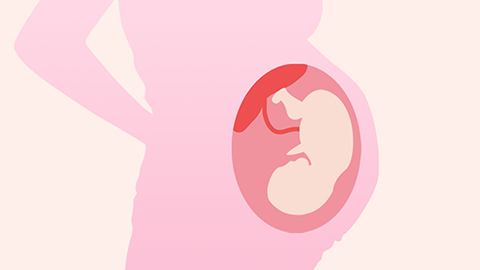
Left occiput anterior (LOA) refers to the fetal position at term, just prior to delivery. Fetal position is defined as the relationship between the designated reference point (or “landmark”) of the presenting fetal part and the maternal pelvis. For example, in vertex presentation, the occiput serves as the landmark; in face presentation, it is the mentum (chin); in breech presentation, the sacrum; and in shoulder presentation, the scapula. In LOA, during labor, the fetus enters the pelvis from the abdominal cavity, with the fetal head entering first. The head is flexed, positioning the occiput—the lowest point of the fetal skull—as the presenting part. Hence, the occiput is the first part to pass through the pelvic inlet.

When the fetal occiput lies in the left anterior quadrant of the maternal pelvis, the position is termed left occiput anterior (LOA). Clinically, LOA is the most common fetal position and also the most favorable for spontaneous vaginal delivery. We hope this explanation has been helpful!