


What Causes Retinal Diseases?
May 17, 2022
Source: Cainiu Health

Dr. Chen You
Introduction
Retinal vascular diseases are often caused by systemic conditions leading to arterial narrowing or embolus detachment, resulting in vascular occlusion and subsequent retinal vascular pathology. Macular disorders—including age-related macular degeneration, myopic maculopathy, macular hole, and epiretinal membrane—typically arise from primary ocular diseases affecting the retina and choroid in the macular region.
Retinopathy is an umbrella term encompassing numerous retinal disorders, with diverse underlying causes. So, what factors can lead to retinal disease?
What Causes Retinal Disease?
Clinically, retinopathy manifests in many distinct forms, each with different etiologies. Broadly speaking, retinal diseases fall into several major categories:
Vascular retinal diseases, including retinal artery occlusion, retinal vein occlusion, diabetic retinopathy, hypertensive retinopathy, and retinal periphlebitis. These vascular disorders are commonly secondary to systemic conditions—such as arterial narrowing or embolism—that result in retinal vascular obstruction and subsequent retinal vascular pathology.
Macular diseases, including age-related macular degeneration (AMD), myopic maculopathy, macular holes, and epiretinal membranes. These typically arise from primary pathological processes affecting the retina and choroid specifically within the macular region.
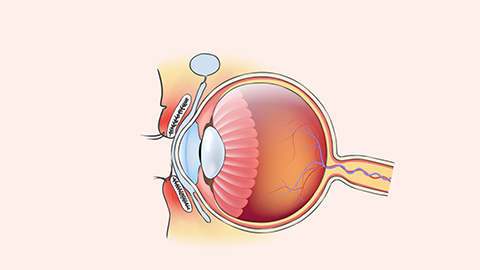
The retina is a neural tissue directly connected to the brain. It is also highly vascularized; thus, disorders affecting the optic nerve often involve the retina as well. The most common retinal pathologies are vascular in nature—such as diabetic retinopathy. Diabetes mellitus is a systemic microvascular disorder, and because retinal vessels are extremely fine, diabetic retinopathy is one of the most prevalent forms of retinopathy. Hypertension is another major contributor: it induces retinal arteriosclerosis, and progressive arterial compression of adjacent veins may lead to retinal vein occlusion—commonly termed “retinal vein occlusion”—resulting in retinal hemorrhage, exudation, and edema.

Another major category comprises macular diseases. The macula—the central region of the retina—is the focal point where light converges in the eye’s “camera-like” optical system. This area is densely populated with blood vessels and neural elements; thus, any pathology here—including hemorrhage and exudation—constitutes a form of retinopathy. We hope this explanation has been helpful!






