


What causes a small fleshy growth around the anus?
Jun 01, 2022
Source: Cainiu Health

Dr. Cheng Yicheng
Introduction
A small fleshy nodule is observed at the anus, which may be a rectal leiomyosarcoma. This tumor most commonly arises in the distal rectum and grows intraluminally—protruding into the rectal lumen—thus appearing as a small perianal nodule. Anorectal polyps also frequently occur at the distal rectum; they typically present as ovoid masses that prolapse through the anus after defecation and often spontaneously reduce back into the anal canal. Internal hemorrhoids are commonly associated with poor dietary habits.
The anal region—the distal part of the human body—consists primarily of the mucosa at the terminal end of the rectum and the perianal skin. Deeper structures include the internal and external anal sphincters. If you notice a small fleshy nodule near the anus during defecation, you may worry it is hemorrhoids. So, what could cause such a small fleshy nodule around the anus?
What Causes a Small Fleshy Nodule Around the Anus?
A small fleshy nodule around the anus may indicate rectal leiomyosarcoma—a rare malignant tumor arising from smooth muscle cells. It most commonly occurs in the lower rectum and grows intraluminally (into the rectal lumen), thus appearing externally as a small fleshy nodule near the anus. Rectal polyps also frequently develop at the distal rectum; they typically appear as ovoid masses and may prolapse through the anus during or after defecation, often spontaneously reducing back into the anal canal. Internal hemorrhoids (a common type of hemorrhoid) are often associated with poor dietary habits. During acute episodes, they may prolapse or become trapped within the anal canal due to pressure from stool, sometimes retracting spontaneously; however, more severe cases may require manual reduction. Other possibilities include squamous cell carcinoma of the anal canal.
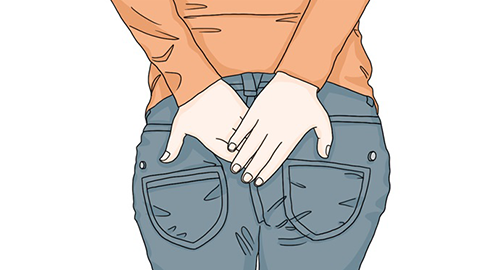
Anal sinusitis can also present as a small fleshy nodule near the anus. This condition arises when the anal sinuses become inflamed and edematous due to irritation from feces and bacterial infection, leading to protrusion of tissue from the anal canal. Such nodules typically possess a relatively long pedicle (stalk). Lastly, rectal prolapse—characterized by inflammation and necrosis of the distal rectal mucosa—can result in mucosal prolapse through the anus, presenting clinically as a visible, reddish, fleshy mass.

When noticing a small fleshy nodule around the anus, it is advisable to consult a healthcare provider for further evaluation—including physical examination, anoscopy, colonoscopy, or imaging—to determine the underlying cause and initiate appropriate treatment. We hope this information has been helpful. Wishing you good health and a joyful life!





