Methods for Removing Scars and Acne Marks
Jun 08, 2022
Source: Cainiu Health

Dr. Liu Wan
Introduction
Methods for scar and acne mark removal primarily depend on the characteristics of the skin damage. Atrophic acne scars can be treated with topical ointments or fractional laser therapy to remove red or dark acne scars. Sun protection is also recommended. Polysulfated mucopolysaccharide cream may help absorb red acne scars, while pigment-lightening creams can address dark acne scars. Acne marks appear either red or dark and are typically residual marks left behind after acne lesions have resolved.
During summer, acne breakouts may occasionally appear on the face—this could be due to poor dietary habits or weather-related factors. So, what are the effective methods for scar and post-acne mark removal?
Methods for Scar and Post-Acne Mark Removal
Scar and post-acne mark removal strategies primarily depend on the characteristics of the skin damage. Atrophic scars resulting from acne can be treated with topical ointments or fractional laser therapy to address red or hyperpigmented (brown/black) post-acne marks. Sun protection is also essential. Polysulfated mucopolysaccharide cream may promote absorption of erythematous (red) post-acne marks, while depigmenting creams help fade melanotic (brown/black) post-acne marks. Post-acne marks typically appear either red or brown/black and usually represent residual changes following resolution of comedones.
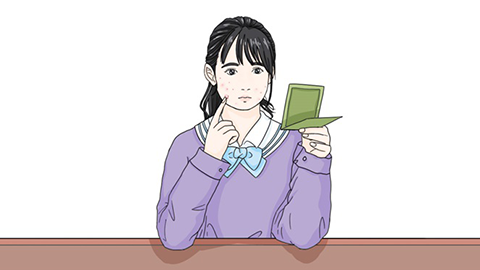
Common acne (acne vulgaris) is an inflammatory skin disorder affecting the pilosebaceous units. After inflammation subsides, residual lesions may include erythematous (red) marks, hyperpigmented (brown/black) marks, and atrophic “ice-pick” or “boxcar” scars. Acne lesions commonly occur in sebum-rich areas such as the face, chest, and back. Excessive sebum production leads to accumulation within the pilosebaceous unit, triggering abnormal keratinization of the follicular epithelium and formation of sebum plugs. This results in follicular orifice dilation and obstruction, ultimately producing open comedones (blackheads). Secondary infection by Propionibacterium acnes and Malassezia furfur further induces folliculosebaceous inflammation. Following anti-inflammatory treatment, residual lesions often manifest as red or brown/black marks—commonly referred to as post-inflammatory erythema (PIE) or post-inflammatory hyperpigmentation (PIH), respectively.

Additionally, topical polysulfated mucopolysaccharide body washes or bufexamac ointments may aid in resolving erythematous (red) post-acne marks. For individuals with hyperpigmented (brown/black) marks, standard sun protection measures, oral vitamin C or vitamin E supplementation, and topical hydroquinone cream—or other pigment-lightening agents—may be well tolerated. At night, pairing these treatments with topical tretinoin cream may further assist in improving atrophic scarring that develops after acne resolution. We hope this article has been helpful. Wishing you a joyful life and good health!