


What should I do if my astigmatism prescription is too high?
Jun 29, 2022
Source: Cainiu Health

Dr. Chen You
Introduction
If the astigmatism prescription is too high, new eyeglasses must be remade. Astigmatism refers to an optical condition in which asymmetric curvature of the cornea results in uneven focal points—hence the term “astigmatism.” Astigmatism has both a magnitude (power) and an axis. If the prescribed power is inaccurate or the axis is misaligned, it may cause uncorrected astigmatic blur or, after correction, result in erroneous orientation of the “fan” pattern (a common clinical sign observed during refraction).
Generally, when myopia or hyperopia occurs, corrective eyeglasses can be worn to improve vision, enabling clearer sight of distant or near objects. Astigmatism is a type of refractive error in the eye, commonly associated with irregular curvature of the cornea. When astigmatism is present, symptoms such as reduced visual acuity and eye strain often occur. So, what should you do if your prescribed astigmatism correction is too strong?
What to Do If Your Astigmatism Prescription Is Too Strong
If your astigmatism prescription is too strong, you will need new eyeglasses. Astigmatism arises from asymmetrical curvature of the cornea (or sometimes the lens), resulting in uneven focal points—hence the term “astigmatism.” Astigmatism has both magnitude (power) and axis orientation. If either the power or the axis is inaccurately prescribed or fitted, uncorrected astigmatism—or corrected astigmatism with an incorrect axis—may result in distorted or blurred vision, often described as “streaking” or “fan-shaped” blur. Consequently, the intended correction fails, and instead of sharp focus, light scatters into diffuse spots. If you experience persistent blurriness, image distortion, or excessive dizziness—especially if dizziness correlates with wearing the glasses—a new comprehensive refraction is necessary. Properly prescribed eyeglasses are essential to minimize disruptions to daily life and learning caused by uncorrected or improperly corrected astigmatism. Therefore, whether the prescribed astigmatism power is too high, too low, or the axis is misaligned, a re-evaluation and new lens fitting are required.
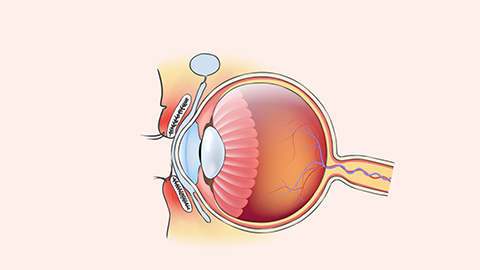
Higher degrees of astigmatism significantly impair visual acuity and overall vision quality. Appropriate correction or treatment must be tailored to the individual case to maximize visual function. For regular high astigmatism, patients may undergo precise refraction to determine the exact degree and axis of astigmatism. Based on these findings, corrective spectacles can be prescribed; alternatively, laser refractive surgery or intraocular lens implantation may be considered where appropriate. For irregular or high astigmatism, a comprehensive ophthalmic evaluation is recommended. Correction may involve rigid gas-permeable contact lenses (often referred to as orthokeratology or “ortho-K” lenses in certain contexts) or specialized scleral lenses. In severe cases, surgical intervention may be necessary.

After surgery, adequate rest is advised to prevent unnecessary complications, and attention to local hygiene is essential. We hope this information is helpful to you.



