


Is astigmatism the same as myopia?
Jun 29, 2022
Source: Cainiu Health

Dr. Chen You
Introduction
Blurred vision due to astigmatism is not the same as myopia; astigmatism and myopia are distinct refractive errors. There are three types of refractive errors: myopia (nearsightedness), hyperopia (farsightedness), and astigmatism. These conditions may coexist, but myopia and hyperopia cannot occur simultaneously in the same eye. Astigmatism arises when the eye is not a perfect sphere, causing light rays to focus as two intersecting lines rather than a single point. In fact, most people’s eyes are not perfectly spherical.
Visual problems have become extremely common among the general population. In recent years, particularly, significant changes in lifestyle—especially the increasing reliance on electronic devices—have led to a marked rise in the incidence of myopia and astigmatism. Given this trend, it is essential to enhance public awareness of myopia and astigmatism to facilitate effective preventive measures in daily life. So, is astigmatism the same as myopia?
Is astigmatism the same as myopia?
Astigmatism is not myopia; they are distinct types of refractive errors. There are three primary categories of refractive error: myopia (nearsightedness), hyperopia (farsightedness), and astigmatism. These conditions may coexist—for example, a person may have both myopia and astigmatism—but myopia and hyperopia cannot occur simultaneously in the same eye. Astigmatism arises when the eye’s shape deviates from a perfect sphere, causing incoming light rays to focus at two separate points rather than converging at a single focal point. Since most human eyes are not perfectly spherical, nearly everyone has some degree of astigmatism—though severity varies widely.
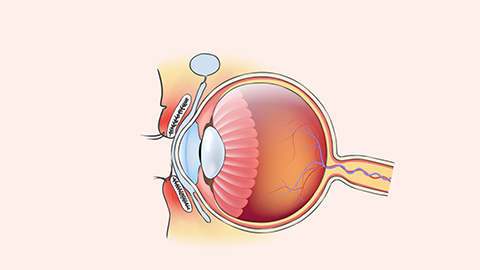
Most individuals have up to 100 diopters (D) of astigmatism, which is considered physiological (normal) astigmatism. Astigmatism under 50 D often does not require correction. However, if astigmatism exceeds this threshold, heightened vigilance is warranted, and further diagnostic testing—such as corneal topography—should be performed to rule out pathological conditions like keratoconus. Patients with astigmatism may perceive objects as distorted or blurred, primarily due to differences in underlying mechanisms: myopia is closely associated with excessive axial elongation of the eyeball, whereas astigmatism results mainly from irregularities in corneal curvature. When either or both of these refractive errors are clinically diagnosed, corrective eyewear (glasses or contact lenses) is typically recommended. For patients aged 18 years or older whose myopia and astigmatism have remained stable for at least one year, refractive surgical options—including laser vision correction (e.g., LASIK) or phakic intraocular lens implantation—may be considered to correct vision.

We recommend that patients frequently gaze into the distance and maintain good ocular hygiene—avoiding rubbing the eyes with unwashed hands. We hope this information proves helpful.




