


Do contact lenses correct astigmatism?
Jun 29, 2022
Source: Cainiu Health

Dr. Chen You
Introduction
Contact lenses are not inherently free of astigmatism. Patients with astigmatism can wear contact lenses to correct their vision; the choice of contact lens depends on the individual’s degree and type of astigmatism. If the astigmatism is mild, a common clinical approximation is to divide the astigmatic power by 2 and convert it into an equivalent myopic correction, which is then added to the spherical (myopic) contact lens power to partially compensate for the astigmatism. However, if the astigmatism is too high, standard spherical contact lenses cannot adequately correct it.
Many people have astigmatism, which can severely impair normal vision. When viewing objects, images often appear blurry, and double shadows may even occur—causing significant difficulties in daily learning and work. To rapidly improve these symptoms, it is essential first to understand the correct treatment methods. So, do contact lenses correct astigmatism?
Do Contact Lenses Correct Astigmatism?
Contact lenses do not “lack” astigmatism correction—they can, in fact, be used to correct astigmatism. Depending on the patient’s specific degree and type of astigmatism, different types of contact lenses may be selected. For mild astigmatism, a common approach is to divide the astigmatic power by two and add this value to the spherical (myopic) correction in standard soft contact lenses—thereby partially compensating for the astigmatism. However, if astigmatism is too severe to be adequately corrected with conventional soft contact lenses, rigid gas-permeable (RGP) contact lenses may be prescribed. These are rigid lenses that, upon insertion, create a tear-filled space between the irregular corneal surface and the lens itself—forming a “tear lens” that effectively neutralizes corneal astigmatism.
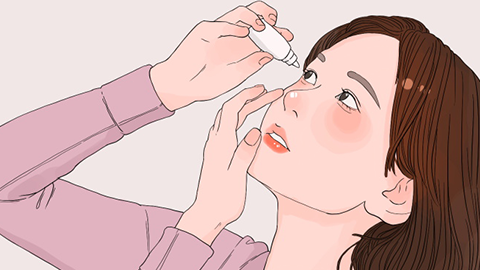
Astigmatism-correcting contact lenses are typically rigid corneal lenses. Currently, rigid gas-permeable (RGP) contact lenses are increasingly used to correct astigmatism—especially high, oblique, or irregular astigmatism. Conventional eyeglasses may cause visual fatigue or fail to achieve optimal corrected vision in such cases. Therefore, rigid contact lenses are often recommended to achieve both effective vision correction and elimination of spatial distortion (e.g., double vision or image warping).
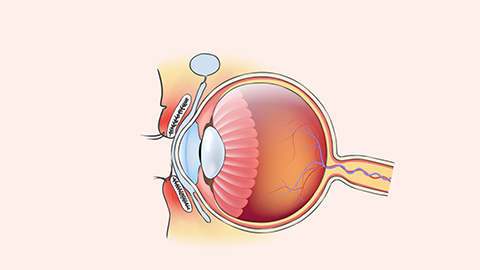
In daily life, maintaining proper posture and healthy visual habits is crucial to prevent worsening of astigmatism. We hope this information proves helpful to you.



