


Differences Between Astigmatism and Presbyopia
Jun 29, 2022
Source: Cainiu Health

Dr. Chen You
Introduction
The key difference between astigmatism and presbyopia is that individuals with presbyopia can see distant objects clearly but experience blurred vision for nearby objects. Astigmatism results from an imperfection in the eye’s ability to focus light, leading to blurred or distorted vision—particularly noticeable in low-light conditions. Presbyopia is primarily age-related, whereas astigmatism can occur at any age. Astigmatism refers to an irregular curvature of the cornea or lens, causing unequal refractive power across different meridians of the eye.
In real life, astigmatism and presbyopia are common visual disorders that cause significant psychological distress to patients and substantially impair quality of life. So, what are the differences between astigmatism and presbyopia?
Differences Between Astigmatism and Presbyopia
The key distinction lies in their underlying mechanisms and symptom profiles. In presbyopia, distant objects remain clearly visible, whereas near objects appear blurry. Astigmatism, by contrast, results from an impaired ability of the eye to focus light properly—particularly under low-light conditions—leading to blurred or distorted vision at all distances. Presbyopia is primarily age-related and typically begins around age 40; it occurs due to hardening of the lens, reduced lens elasticity, and diminished contractility of the ciliary muscle, collectively causing a decline in accommodative capacity. This leads to a receding near point, making it difficult to focus on nearby objects. Astigmatism, however, can occur at any age and arises when refractive power differs across various meridians of the eye—or even within the same meridian—causing incoming parallel light rays to fail to converge into a single focal point on the retina, instead forming a focal line.
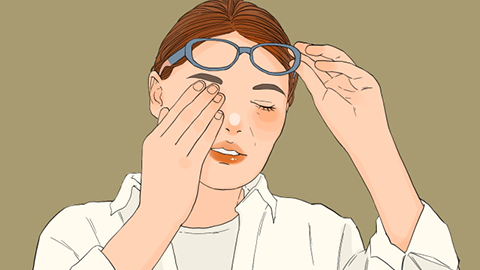
Regarding the adverse effects of astigmatism, visual acuity becomes noticeably impaired when astigmatic refractive error exceeds 150 degrees. Corrective eyeglasses are then required to effectively improve vision and prevent numerous negative impacts on work and daily life. For adult patients with astigmatism, laser refractive surgery offers a highly effective non-glasses alternative. Generally, this surgical approach is considered very safe and yields excellent clinical outcomes.

In daily life, it is essential to avoid eye strain—for example, by limiting prolonged use of electronic devices such as televisions, smartphones, and computers. We hope this explanation proves helpful to you.



