


How to Treat Myopia in Children
Jun 29, 2022
Source: Cainiu Health

Dr. Chen You
Introduction
To treat myopia in children, an appropriate method should be selected based on the child’s age, degree of myopia, willingness to comply with treatment, and family circumstances. First, it is essential to determine whether the myopia is true (organic) or pseudo-myopia. Targeted treatment can then be initiated accordingly. In cases of pseudo-myopia, administration of cycloplegic agents (e.g., cycloplegic eye drops) results in resolution of the refractive error and restoration of normal visual acuity.
Myopia is no longer common among adults, yet an increasing number of children are developing it. Childhood myopia is not inherently alarming; however, timely and appropriate treatment is essential to ensure children enjoy clear, unobstructed vision—preserving their quality of life and academic performance. So, how should childhood myopia be treated?
How to Treat Childhood Myopia
To treat childhood myopia effectively, the chosen approach must be tailored to the child’s age, degree of myopia, tolerance, and family circumstances. First, it is critical to distinguish between true (axial) myopia and pseudo-myopia. Treatment strategies differ accordingly. In cases of pseudo-myopia—caused by ciliary muscle spasm—vision typically returns to normal and refractive error disappears after cycloplegic (ciliary muscle-relaxing) eye drops are administered. In contrast, for true myopia, commonly used interventions aim to slow progression rather than reverse the condition. These include orthokeratology (OK) lenses, low-concentration atropine eye drops, light therapy devices, defocus-incorporated soft contact lenses, defocus-designed spectacles, and defocus-correcting rigid gas-permeable (RGP) lenses. While these methods help control the worsening of myopia, they are not considered “cures.”

Currently, there is no scientific evidence supporting the efficacy of any medication—whether topical eye drops, oral agents, massage, or mechanical devices—in curing true myopia. Once true myopia develops, it is irreversible and tends to progress annually, usually stabilizing only after age 18. Therefore, true myopia cannot be cured—it can only be corrected, for example, with spectacles, contact lenses, or, in adulthood, refractive laser surgery.
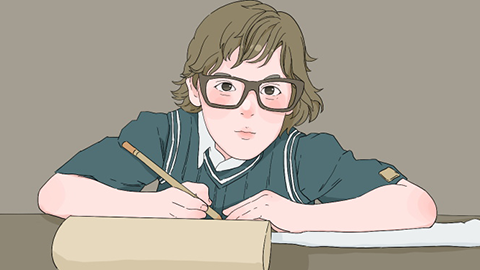
We recommend that parents encourage healthy visual habits in their children—including proper posture during reading and studying, limiting screen time on electronic devices—and actively support efforts to maintain optimal eye health. We hope this information proves helpful to you.







