


What causes gray nail (onychomycosis)?
Sep 13, 2022
Source: Cainiu Health

Dr. Liu Wan
Introduction
Gray nail is a condition caused by fungal infection of the nails, which can be transmitted through direct or indirect contact. Gray nail primarily leads to thickening, roughness, and discoloration of the nail, as well as related manifestations such as nail shedding and hollowing. Treatment for gray nail requires a relatively long duration, typically 3–4 months for most patients. After treatment, patients still need to return to the hospital for follow-up visits, and the affected area should be kept as dry as possible during treatment.
Many patients with gray nail (onychomycosis) fear transmitting the infection to others and thus become reluctant to interact with people, significantly affecting their daily lives. So, what causes gray nail?
What Causes Gray Nail?
Gray nail is a condition caused by fungal infection of the nails and can be transmitted through direct or indirect contact. It mainly leads to thickening, roughness, and discoloration of the nails, as well as nail detachment and hollowing. After diagnosis, patients should begin treatment promptly. Treatment for gray nail usually takes a long time—typically 3 to 4 months for most patients—and follow-up visits to the hospital are required after treatment. During treatment, keeping the affected area dry is recommended.
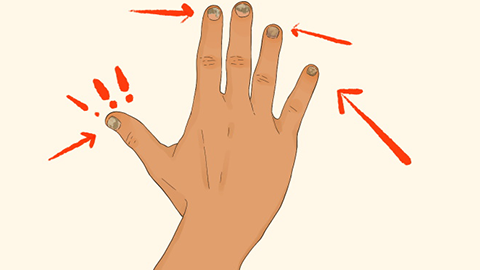
Clinically, gray nail can be classified into four types: superficial white type, distal lateral subungual type, proximal subungual type, and total dystrophic type. If left untreated, the infected nail harbors fungi that may spread to other body parts upon contact, causing additional fungal infections. The condition also affects appearance—nails become thickened, hollowed, and discolored—leading to psychological distress during social interactions. Severe cases may reduce tactile sensitivity, impairing work and daily activities. Additionally, gray nail increases the risk of developing paronychia (nail fold inflammation).

For mild cases with only a few affected nails, topical treatments such as amorolfine topical solution or ketoconazole cream are recommended until new healthy nails grow in. For more extensive infections, oral itraconazole capsules are advised. We hope this information helps you. Wishing you good health and happiness!



