What foods should not be eaten with taro?
Nov 25, 2024
Source: Cainiu Health

Dr. Yang Ziqi
Introduction
Under normal circumstances, taro is a nutritious tuberous food, but attention should be paid to its combination with certain foods when consumed, mainly including persimmons, sweet potatoes, fatty meat, corn, bananas, and others, in order to avoid adverse reactions. When consuming taro, one should pay attention to proper pairing of ingredients and avoid eating it with the aforementioned foods to ensure dietary health and safety.
Generally speaking, taro is a root vegetable rich in nutrients, but attention should be paid to food combinations when consuming it. It is mainly incompatible with foods such as persimmons, sweet potatoes, fatty meat, corn, and bananas, to avoid adverse reactions. Detailed explanations are as follows:
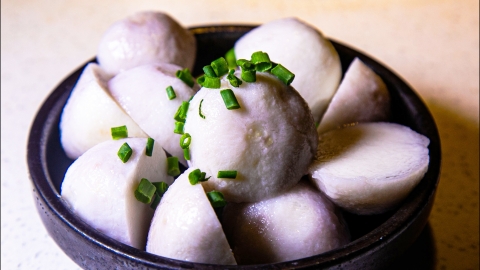
1. Persimmons
The starch in taro may combine with tannic acid from persimmons in the stomach, forming substances that are difficult to digest. Long-term accumulation might lead to the formation of gastric stones.
2. Sweet Potatoes
Both taro and sweet potatoes are high-starch foods. Consuming them together may increase the burden on the gastrointestinal tract, leading to symptoms such as indigestion and abdominal distension.
3. Fatty Meat
Eating taro together with fatty meat may accelerate gastrointestinal motility, causing discomfort symptoms such as diarrhea and loose stools. This is because fatty meat contains high levels of cholesterol and fat, while taro is rich in coarse fiber and starch; consuming them together may negatively affect the gastrointestinal tract.
4. Corn
Corn contains abundant dietary fiber, while taro has a high starch content. Consuming them simultaneously may interfere with each other, reducing nutrient absorption efficiency and potentially causing symptoms such as abdominal pain and loose stools.
5. Bananas
Taro contains abundant starch, while bananas contain a certain amount of potassium. Consuming both together may affect the digestive and absorptive functions of the gastrointestinal tract, leading to discomfort symptoms such as abdominal distension and pain.
When consuming taro, attention should be paid to reasonable food pairing, avoiding consumption with the above-mentioned foods to ensure dietary health and safety.