


Is Houttuynia cordata toxic?
Jun 25, 2025
Source: Cainiu Health

Dr. Sun Lianqing
Introduction
Under normal circumstances, Houttuynia cordata is non-toxic. However, it should be consumed in moderation in daily life. Although Houttuynia cordata itself is non-toxic, individual differences should still be considered. A small number of people may be allergic to Houttuynia cordata, and allergic reactions such as rash, itching, and shortness of breath may occur after consumption; these individuals must strictly avoid consumption. Houttuynia cordata has a slightly cold nature, and individuals with cold deficiency of the spleen and stomach or infants should control the dosage when consuming it.
Generally speaking, Houttuynia cordata is non-toxic, but it should still be consumed in moderation in daily life. Detailed analysis is as follows:
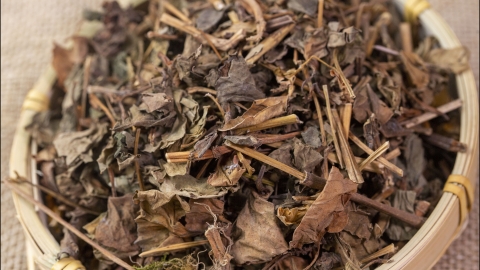
Houttuynia cordata is a common traditional Chinese herb, also known as "Zhe'er Gen." It has a pungent taste and cool nature, and is associated with the lung, stomach, kidney, and bladder meridians. It functions to clear heat and detoxify, resolve abscesses and discharge pus, and promote diuresis and relieve stranguria. Clinically, Houttuynia cordata is commonly used to treat conditions such as expectoration of pus in lung abscess, cough due to lung heat, toxic sores and abscesses, and painful, difficult urination. As a traditional Chinese medicinal herb, Houttuynia cordata is widely used in clinical practice, and no cases of poisoning caused by its use have been reported.
Although Houttuynia cordata itself is non-toxic, individual differences should still be considered. A small number of people may be allergic to it, experiencing allergic reactions such as rashes, itching, or rapid breathing after consumption; these individuals must strictly avoid consumption. Due to its slightly cold nature, individuals with deficiency-cold in the spleen and stomach or infants and young children should control the dosage when consuming it, avoiding excessive intake that may lead to gastrointestinal discomforts such as diarrhea and abdominal pain. Additionally, when used as a medicinal herb, it should be administered under the guidance of a TCM practitioner, with specific herbal combinations based on the individual's condition. It should not be taken in increased doses or for prolonged periods without medical advice, to prevent adverse effects due to individual physical differences.




